THE SYSTEM OF ACTION FOR PHYSICAL OPERATIONS
Your operation knows more than your systems do
Your team notices problems long before your systems do. Most of what they notice gets said out loud and never written down, so it never reaches the people or the software that could act on it.
Relay is the system of action for physical operations: it captures what your frontline actually says and does, and turns it into action in the systems you already run.
THE PROBLEM
The most useful thing said on your floor today will not reach a system.
It happens on nearly every floor, and it usually looks something like this.
“That pump has been running rough all week.”
An operator says it over the radio, and that one sentence carries years of knowing how that machine is supposed to sound.
Nothing is written down.
No work order gets opened, because nobody opens one for a noise, and by then the sentence is already gone.
The line goes down.
Hours of lost production that nobody saw coming.
We call this signal evaporation.
Knowledge that is spoken, and then lost, whether because nothing captured it or because the alert that carried it was never seen.
62% of manufacturers we surveyed said missed information and communication breakdowns cause delays, rework or missed handoffs at least a few times a month.
WHAT HAPPENS WHEN YOU RUN ON RELAY
The same pump, on a floor running Relay.
Nobody does anything differently. People talk on the radio the way they always have, and the only difference is that none of it disappears.
Every shift adds to a record that belongs to your operation, and you can ask it questions in plain language. It works the other way too, so an operator can ask how the team fixed something last time and hear the answer right away, without walking to a terminal or tracking down a colleague.
WHY RELAY WORKS
Better data, and a better experience for your team.
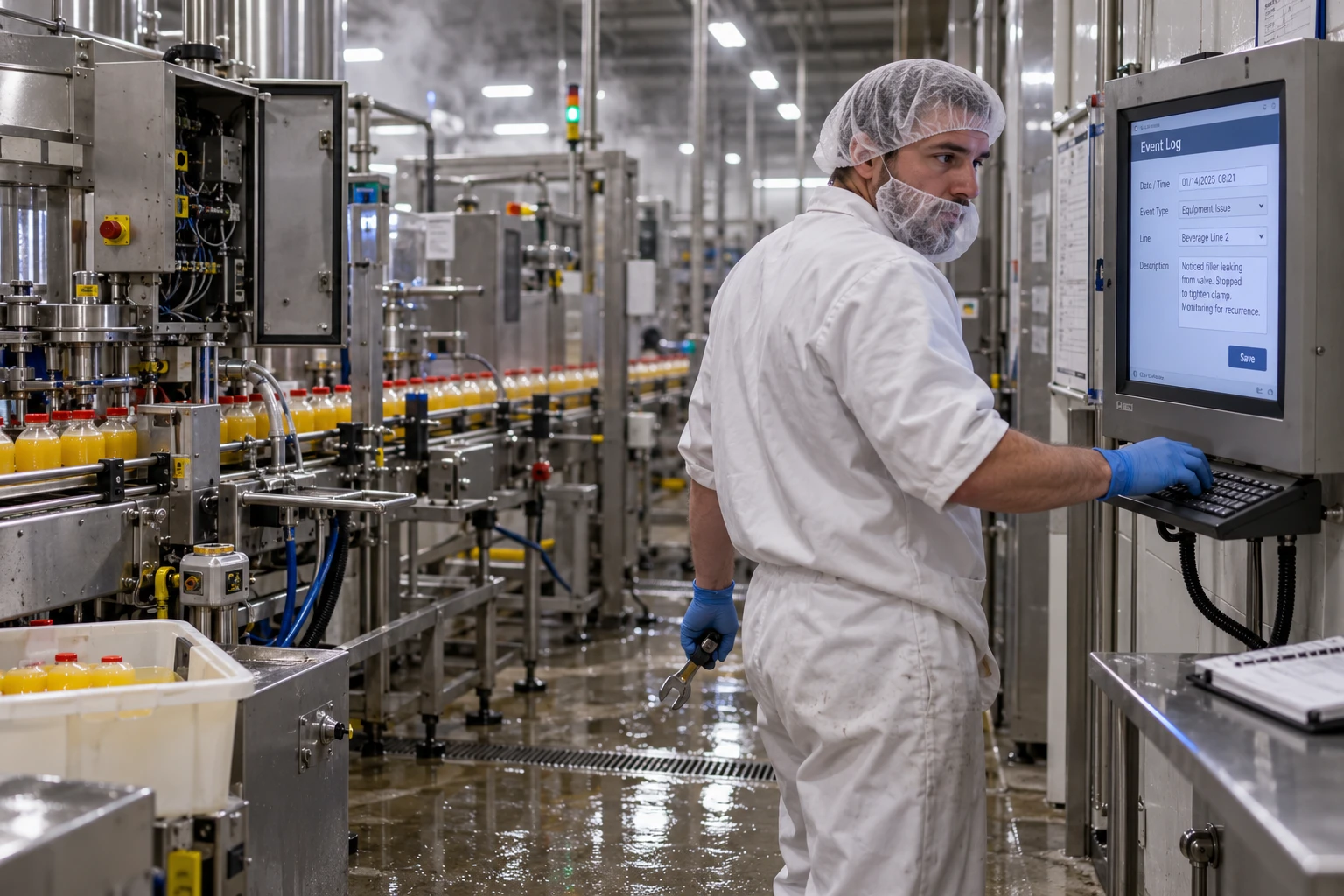
Incomplete and unreliable.
Typed into a form at the end of a shift, from memory, by whoever still had time. The reason gets picked from a fixed list, and it lands late, if it lands at all.
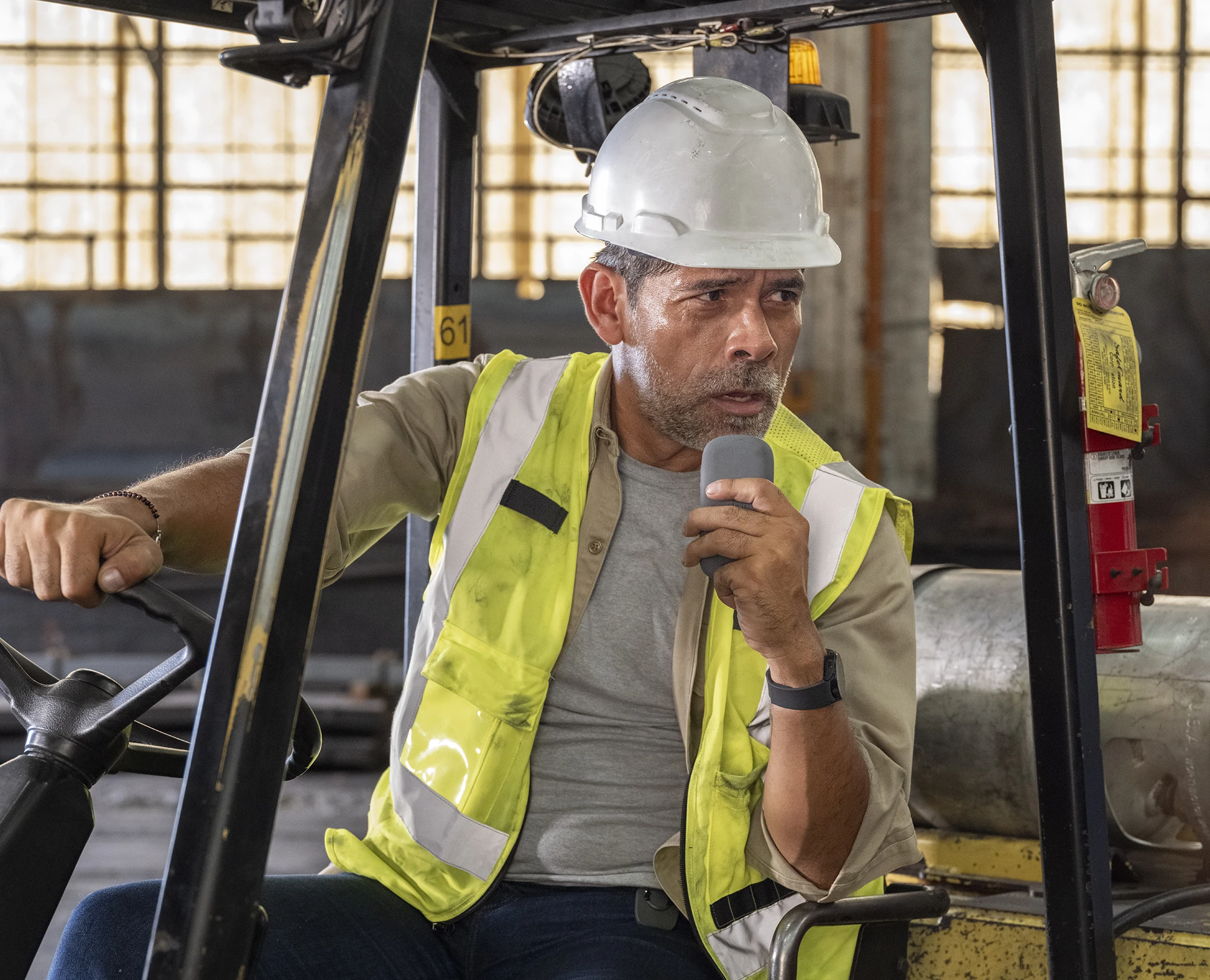
Complete and continuous.
Said out loud as it happens, without anyone breaking stride. Friction-free context that builds all shift, so the answers are already there when somebody needs one.
THE REASON IT WORKS
The problem was never the screen. It is the stopping.
Long before touchscreens and keyboards, the human voice was how we coordinated work. It is the original tool: older than writing, faster than typing, and it lives in the flow of the work itself. There is nothing wrong with a tablet on a wall or a form in an app. The trouble is what they ask a person to do, which is put down whatever they are holding and go type something in. On a busy shift that almost never happens, so most of what your team knows never gets written down at all.
HOW WE GOT HERE
A better radio was never going to be enough.
So we kept building, one layer at a time.
WHAT WE BUILD
One system, built end to end.
Catching what your team says, and doing something useful with it, takes more than one product. It took more than a decade and over a million engineering hours to build every layer: the equipment your team will actually carry, the models and software we tuned for your environment, and the ground-truth record only your own floor can produce. Plenty of companies build one or two of these. We built all of them.
Your team talks the way they always have, and that builds a record of what is happening in your operation. You can ask that record questions and act on what it tells you, and everything you do goes back in, so it keeps getting more useful.
The Core Elements of the Relay System of Action
HARDWARE
The part your team actually carries.
RelayX and RelayM are smart radios built for loud, dusty, wet work, and around them sit the accessories that keep a fleet running: speaker mics, headsets, cases and clips, charging racks, and location beacons that install without drilling or wiring. Fleet Shield™ keeps every device in the fleet charged, assigned, and accounted for.
Noise defeats phones, gloves defeat screens, and batteries die by lunch. If you work with your hands there is no desk either. We did not pick the radio; the conditions of frontline work did.
Push to talk is one of the things this system does, not the whole of what it does.
OUR OWN MODELS
Speech that holds up in a plant.
We build and tune our own speech models, in our own stack, which is why they work on a floor and not only in a quiet office: background noise, distance, accents, and people talking with their backs to the line. Every transmission is transcribed as it is spoken, even in a loud room. TeamTranslate™ delivers a message in 35 languages as it is spoken. Steady Link™ moves between cell, Wi-Fi and private 5G mid-sentence so messages do not drop.
SOFTWARE
Where your team sets things up and gets answers.
The Relay Dashboard is where administrators manage channels, alerts, workflows and devices across every site. The Relay App puts those same channels on a phone for anyone responding from an office. And there is a place to ask a question about your shifts and get an answer, with the transcripts it came from listed underneath so you can check it yourself.
YOUR RECORD
A record only your own floor can build.
A searchable transcript of every shift: what was said, when, where, and by whom. It belongs to your operation, and it gets more useful the longer you run, because a pattern needs history before anyone can see it. The why, preserved right alongside the what. It can only be built by your own people, on your own floor, over time, which is what makes it yours and what makes it the ground truth the rest of the system runs on.
ACTION
Reaching the person who can help.
Capturing the signal is only half the battle. An emergency alert goes out in under a second with the person’s name and location, and responders can talk back on the same device. Keyword alerts start whatever workflow you choose. An open API sends the record wherever you want it: into your maintenance system, your BI tools, or your own models. Coverage means people, not just places: every worker, every shift, indoors and out. The bearing that grumbled shift after shift gets replaced on your schedule, not its own. Knowing was never the point. Action is.
AND IT KEEPS GROWING
The system is not finished.
Relay keeps adding to the system. When something new is ready, it arrives on the equipment your team already carries. There is no new rollout, no new hardware to buy, and nothing new for anyone to learn.
THE RETURN TRIP
The wisdom of the floor does not just flow up. It flows back down.
For the first time, the collective experience of the whole operation is returned to the frontline worker’s ear at the moment it is needed. A question asked out loud, and a real answer delivered, drawn from the hard-won lessons of every shift that came before. On their belt and in their ear, right at the machine.
An operator at the line asks how the team fixed the jam last time, and hears the answer. No terminal, no tracking someone down, no starting over.
THE RETURN TRIP
“How did we fix the number three pump last time?”
ANSWER, IN THEIR EAR
Nights reseated it and ran it at reduced speed until the changeover. The fix held for eleven days.
PART OF THE SAME SYSTEM
Team communications, worker safety, and translation are already part of it.
These are not add-ons or separate products to buy. They run on the same equipment and the same record as everything else here, so turning one on never means another rollout.

TEAM COMMUNICATIONS
Talk to anyone, anywhere on site.
Push to talk with nationwide range and channels that match how your operation is organized. No repeaters, no licenses, and no infrastructure project. This is where most radio replacements come in.
WORKER SAFETY
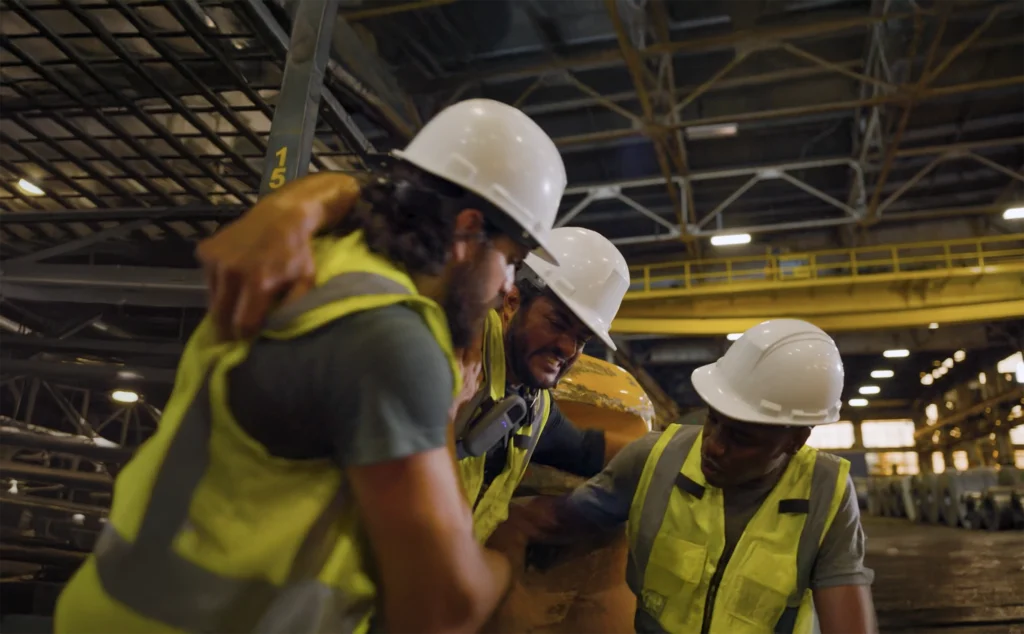
An alert, a location, and a voice on the other end.
A rapid press sends an emergency alert in under a second with the person’s name and location, indoors or outdoors, and responders talk back on the same device. You get the panic alert and the two-way talk in one device instead of two things to carry.
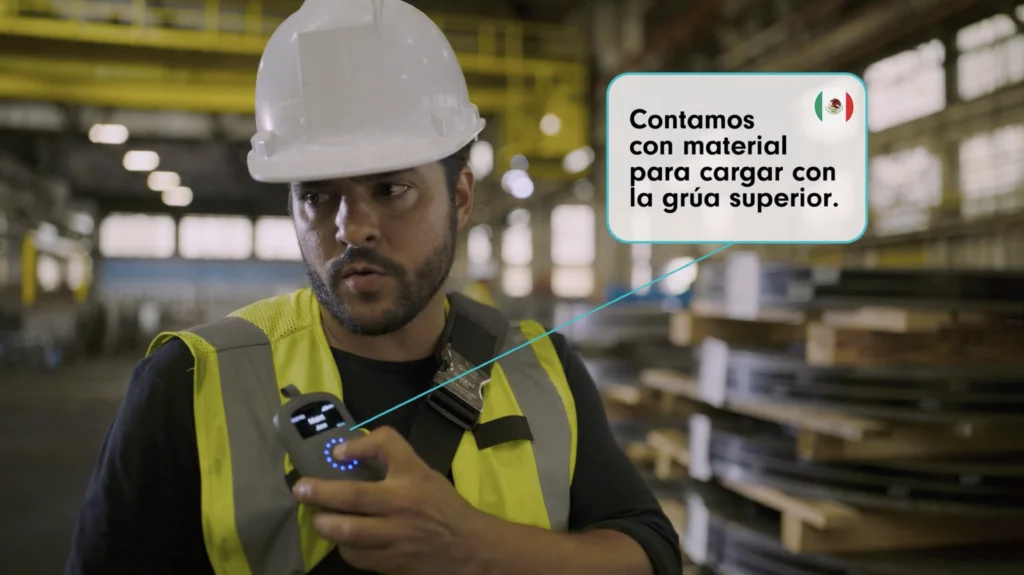
TEAMTRANSLATE™
Everyone in the conversation, in their own language.
Set a language for each person and every message arrives translated into it, in 35 languages, across every device, the app and the dashboard. Nobody has to pull a bilingual worker off their own job to interpret.
Frequently Asked Questions
Systems of record are archives. They remember what happened yesterday, and only the part somebody had time to write down, which is a bit like reading a history book written from memory. They do that job well, so no, you do not have to replace them.
Relay feeds the systems you already run instead of competing with them. Your maintenance system, your production system and your safety workflows keep doing what they do. They just stop running on the small share of floor information that happens to reach them today.
It records what someone says into it when they press the button to talk, and transcribes it into text your team can search. That is the whole mechanism. The device is a two-way radio, so it transmits when a person chooses to transmit, the same as the one it replaced, and the record is made of those transmissions.
The record belongs to your operation, and it works in both directions. It is what lets a supervisor find the real cause of a stoppage. It is also what lets an operator ask a question at the line and get an answer, without walking to a terminal or tracking down a colleague.
Relay uses AI to understand speech in noisy places, to translate between languages while people are talking, and to answer questions about what happened on your shifts. We build and tune those models ourselves instead of wrapping someone else’s. That is why they hold up in a plant and not just in a quiet office.
In practice that means speech understood in a loud room, a message that arrives in the right language, and a question that gets a straight answer with its sources attached.
The equipment works out of the box on cell, Wi-Fi and private 5G, so there is no infrastructure project, no repeaters and no FCC licenses. Where indoor location is needed, beacons install without drilling or wiring. An 800-room resort was mapped in six hours, and a 2.1 million square foot hospital in four.
Training takes almost no time, because there is nothing new for anyone to learn. Rolling it out is mostly a matter of asking your team to carry a new device instead of the old one. No one has to stop their work to speak. Speaking is how they work.
Relay uses cell, Wi-Fi and private 5G, and switches between them automatically, so a call for help gets through from wherever someone is standing. That is Steady Link™. Teams that spent years planning around dead zones no longer have to.
Tell us what is happening in your operation.
Answer a few questions about how your floor runs today, then pick a time that works.