
RELAY FOR WAREHOUSING & LOGISTICS
The minutes spent finding people are your throughput gap.
Radios that die in the freezer. Supervisors walking the floor to find a picker. Minutes lost between a job ticket and the person who can do it. That lost time is throughput and labor leaking out of your operation. Relay makes your whole floor visible and coordinated, without changing how your site operates.
THE THREE THINGS YOU'RE TRYING TO GET RIGHT
Your throughput, your language gaps, and your safety response are all communication problems.
Most warehouses run on instinct, radios that don’t reach the freezer, and supervisors walking the floor to find people. The minutes lost searching for a worker or dispatching a picker are throughput and labor hours you never get back, and Relay works on all three.
82%
Throughput
Minutes lost finding a worker, dispatching a picker, or chasing a task.
Language gaps
A misunderstood instruction on a highly multilingual, jargon-heavy dock floor.
Safety Response
A lone worker in a freezer aisle where radios don't reach.
HOW IT WORKS
Three jobs, one radio your team already knows.
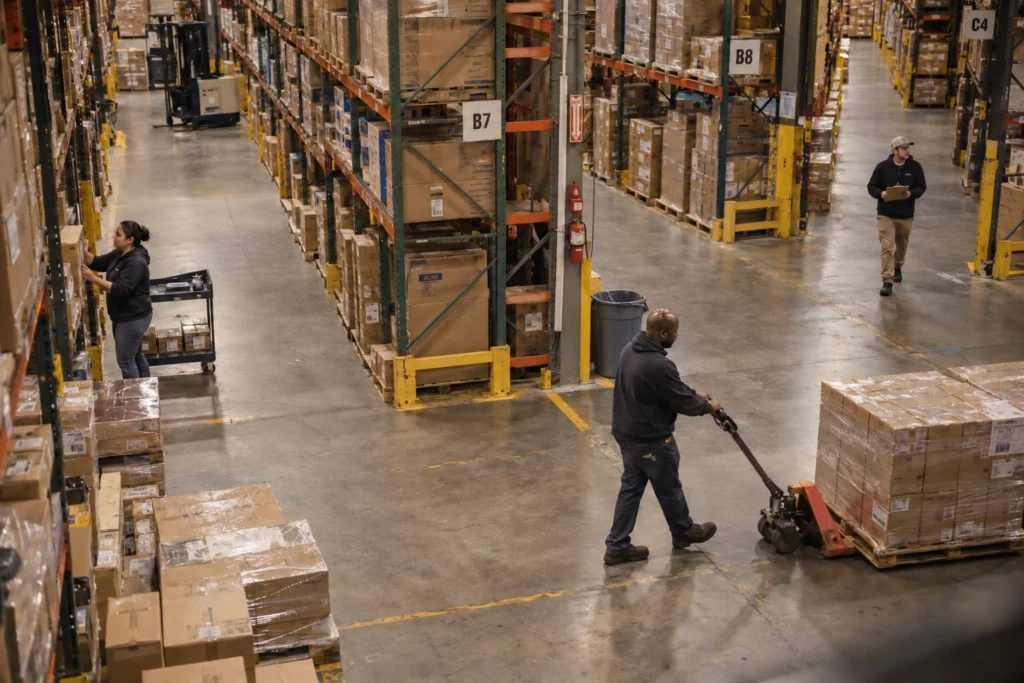
Stop walking the floor to find people. See every worker and job in real time.
The lost minutes in a warehouse aren’t the work; they’re finding the right person and getting them the right task. Relay shows every worker and job on a live map, so you dispatch the closest available person in seconds.
- A supervisor stops leaving their area to track down a picker.
- At one cold storage site, replenishment tasks that took 20 minutes now take 10 seconds.
- The floor moved the same volume with the same team using about 300 fewer labor hours a week.
300
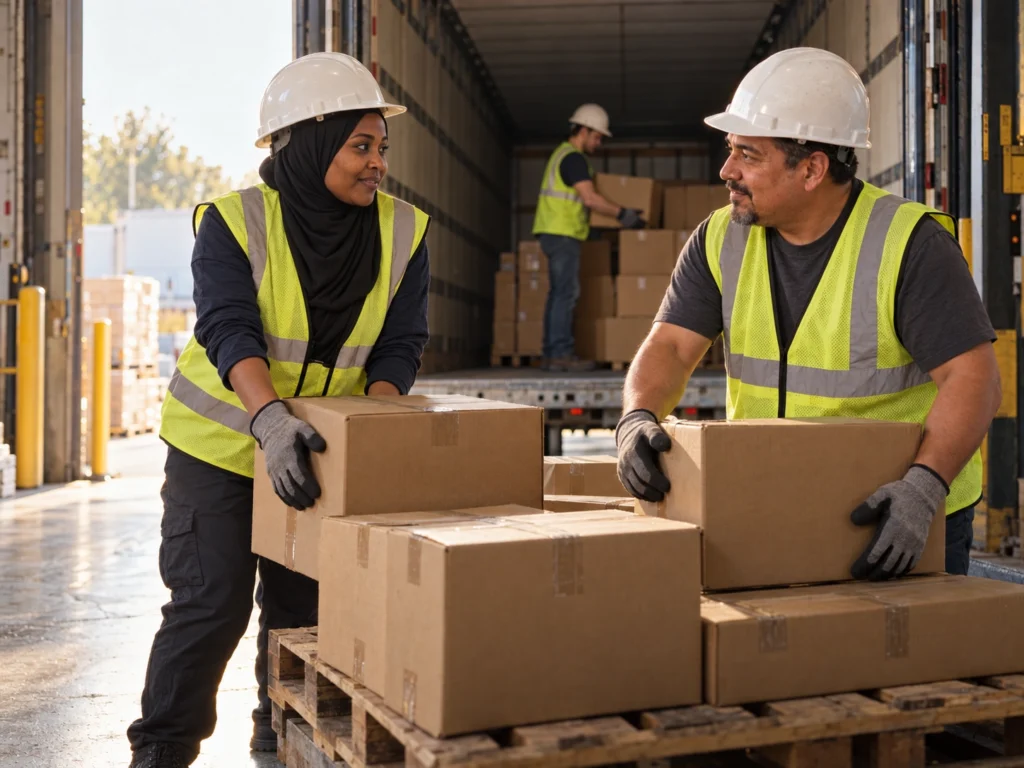
Every message understood, in every worker's own language.
Dock and warehouse floors are highly multilingual, and radios do nothing to bridge that. A misunderstood instruction costs minutes, limits who you can hire, and becomes a safety risk when a worker can’t understand a warning.
- TeamTranslate™ lets every worker speak and listen in their own language, inside the flow of communication.
- A shift lead who speaks another language can run the floor directly, not through a translator.
- The language barrier stops being a reason not to hire or promote someone.
35
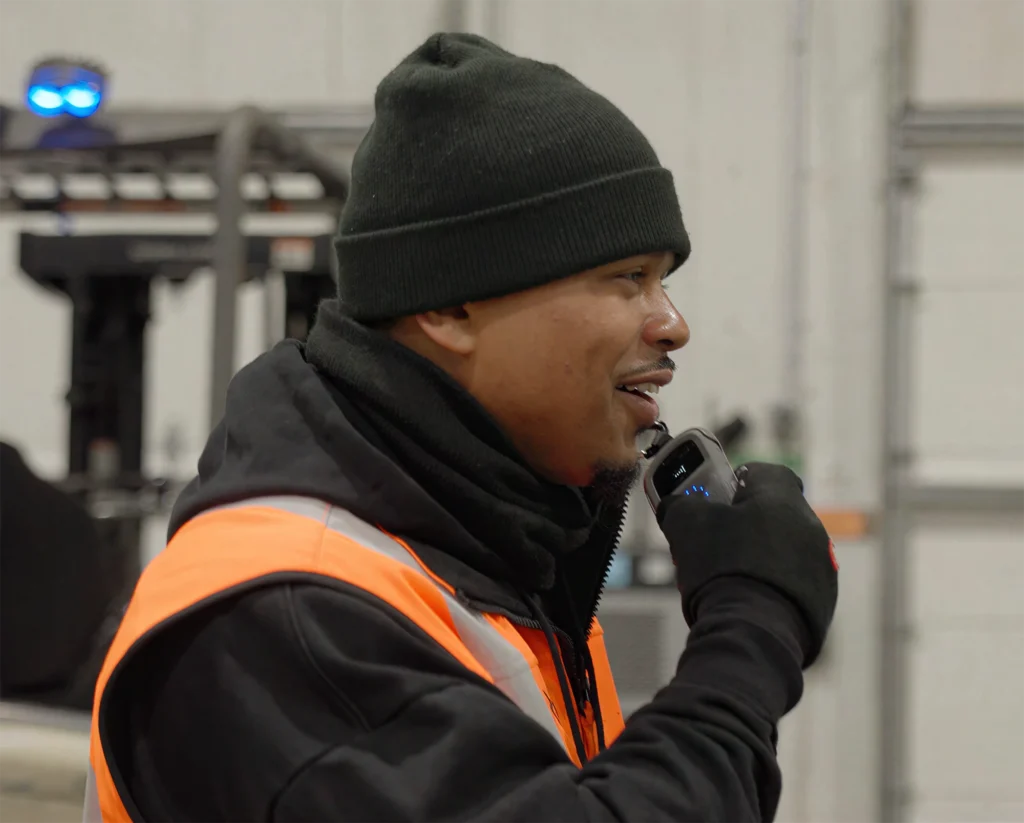
Know the moment something goes wrong, and exactly where.
A lone worker in a freezer aisle or an isolated dock has no reliable protection when radios don’t reach them. The gap between an incident and a coordinated response is where outcomes are decided.
- Instant alerts, known worker location, and coordinated incident response.
- A slip in the freezer or a burst pipe gets help in seconds instead of after someone walks by.
- A manager can run a real-time shelter-in-place from anywhere, through the Relay app.
40% - 98.7%
in-freezer connectivity at one site, reaching workers where radios could not.
THE NUMBERS, FROM THE FLOOR
What changes when your floor runs on Relay.
<12 weeks
300 hrs
45 mins
Day one
Proof from the floor
The floor sells it better than we can.
“I've already recouped my initial $12,000 investment in 12 weeks.”
General Manager, Leading Cold Storage Operator
“We have 100% coverage everywhere in our building. We've never had that before.”
Tom Houtz, CSP, Corp. Director of Safety & Compliance, Dutch Valley Foods
“The devices give us the real-time location of our operators, which we didn't have before, and it helps us make smarter, faster decisions.”
General Manager, Leading U.S.-Based Cold Storage Operator
“We've significantly reduced our turn times over the past three years and now average 35 to 45 minutes. The devices had a huge impact on that.”
General Manager, Leading Cold Storage Operator
The hardware behind the layer
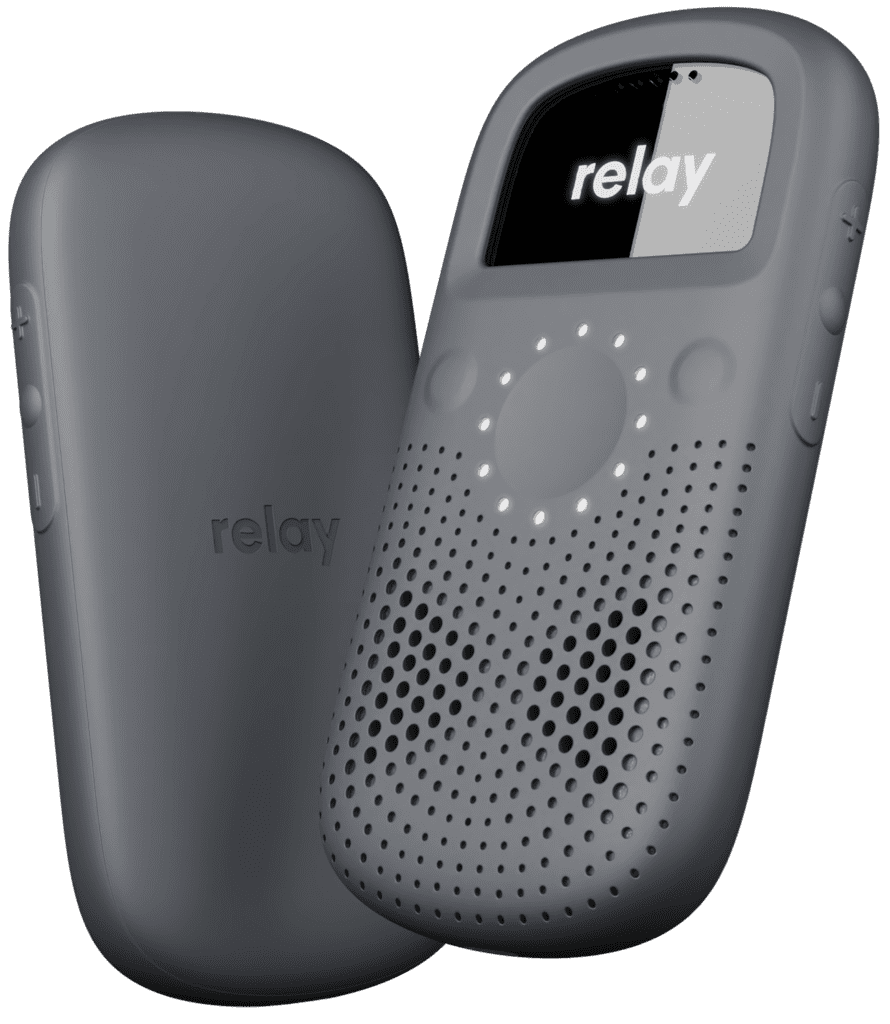
RelayX: built for the warehouse floor.
The problem on the floor isn’t the screen; it’s breaking your work pattern to stop and tap, type, or walk to a terminal. Relay is voice-first and purpose-built, so information moves in whatever fits the moment, from the freezer to the yard, without anyone breaking stride.
Steady Link™
Carrier redundancy with sub-second failover; the message gets through thick freezer walls and cellular dead zones.
TeamTranslate™
Real-time speech translation across 35 languages, on the device.
Indoor & outdoor location
A live map of every worker and job, so you dispatch the closest person in seconds.
Cold-rated & rugged (IP68 + IP69K)
Holds a charge through hours in the freezer and survives drops and washdowns.
Frequently Asked Questions
A durable, voice-first device and cloud service that replaces your two-way radios and adds a live view of where your people and jobs are, translation in the moment, and a connection that works through freezer walls. Relay is the system of action for physical operations: it captures what your frontline actually says and does, and turns it into action in the systems you already run.
Mostly from time that never shows up on a report: the wait on a busy channel, the walk to hand off a task, the truck idling while the yard gets sorted. Those small gaps repeat hundreds of times a shift. Close them and it turns into lower labor hours and faster truck turns.
No. Relay sits on top of what you run now. Your WMS and labor management keep tracking work; Relay is the human layer that carries the message to the right person. The only thing it replaces is your radios.
It’s built to survive the places radios give up. It carries a message through insulated walls and switches networks on its own. The honest way to prove it is to try it: pick your worst dead zone and send a message during a demo. (A site usually needs floor Wi-Fi in place first.)
No. A shift lead who speaks another language can run a handoff themselves, speaking in their own language while each person hears it in theirs. In practice that lets leads take on more responsibility.
Yes. What holds one site back tends to show up at the others too, so a result you can point to at one building becomes the case for the next. Our largest cold storage customer began with a handful of sites and grew from the proof.
START WHERE THE VOLUME IS
See what Relay can do on your floor.
Your throughput, your language gaps, and your safety response are all communication problems. Let us show you the minutes you can get back, starting with your highest-volume site.