RELAY FOR PULP & PAPER MANUFACTURING
In a loud mill that never stops, a missed message is a safety risk.
From the pulp line to the paper machine to the finishing floor, throughput and safety break down for one reason: a message that isn’t heard, understood, or acted on in time. A late word on a product changeover becomes a pallet of waste; a hazard call that doesn’t land becomes an incident. Relay keeps every worker safe and connected, in every language, everywhere your mill runs.
THE THREE PROBLEMS IN EVERY MILL
Your uptime, your safety risk, and your language barrier are all communication problems.
A changeover the floor hears about too late, so the line runs the wrong job. A hazard call that doesn’t reach the right people fast enough. A crew that speaks five languages, plus contractors and drivers at the gate who speak a sixth. Different failures, one root cause. Relay works on all three in the mill you already run.
82%
Relay Research, survey of 500 full-time U.S. manufacturing professionals, August 2026.
Uptime
A late word on a run change becomes scrap, rework, and catch-up time.
Safety
A hazard call that doesn't reach the right people fast enough.
Language barrier
A crew of many languages, plus contractors and drivers at the gate.
HOW IT WORKS
Three jobs, one radio your team already knows.
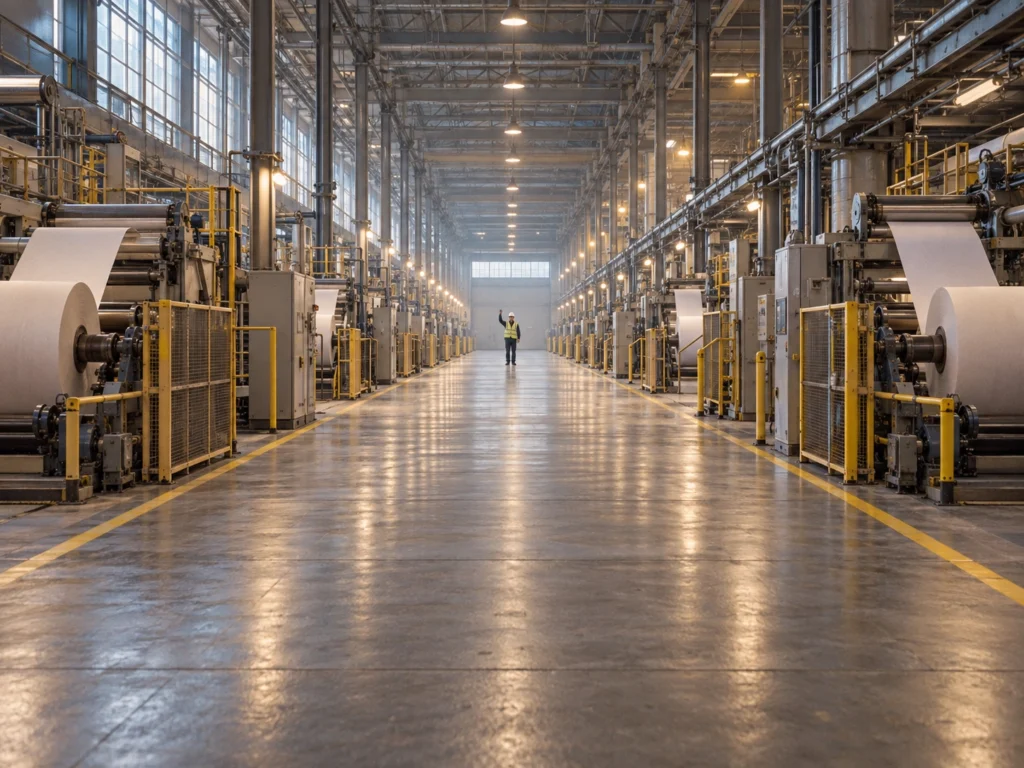
When the floor hears the change in time, the run stays right.
A run turns to waste when the floor doesn’t get the word in time: a new SKU, a die change, an approval that just came back. The notice sits on a screen no one’s standing at, the line runs the wrong job, and now there’s scrap, a reset, and a customer waiting on a rerun. 41% of manufacturers hit weekly communication problems that disrupt production, and 32% say each takes one to four hours to fix.‡
- A 1:1 or group call reaches the exact crew running that line.
- The change goes out by voice, so nobody has to be watching a screen.
- Every call is transcribed, so the next shift starts with the full picture.
32%
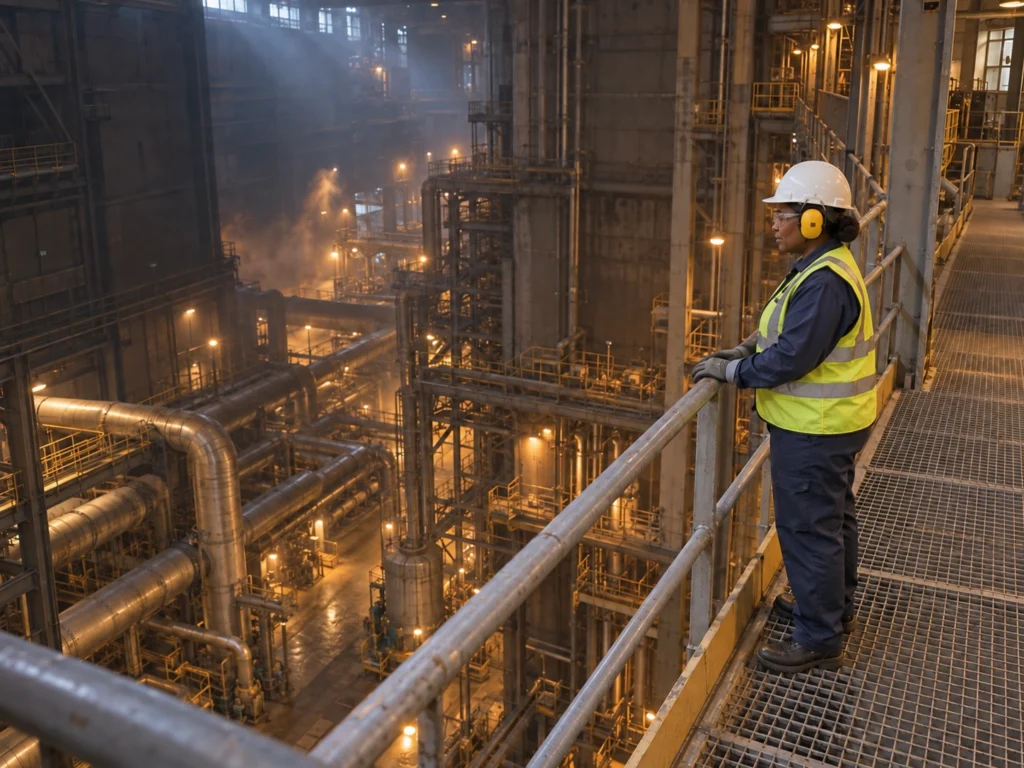
Prevent the incident. Command the response. Prove what happened.
Safety plans break down when a worker is alone near moving rolls, hot recovery boilers, or chemical lines. 83% of teams say they improvise at least sometimes because the information they needed was never captured.
- Scheduled broadcasts workers must acknowledge for high-risk areas help prevent incidents.
- One-button panic and voice incident codes bring the right people in fast, with location on a map.
- Every conversation is captured, timestamped, and searchable, a shared record instead of memory.
6x
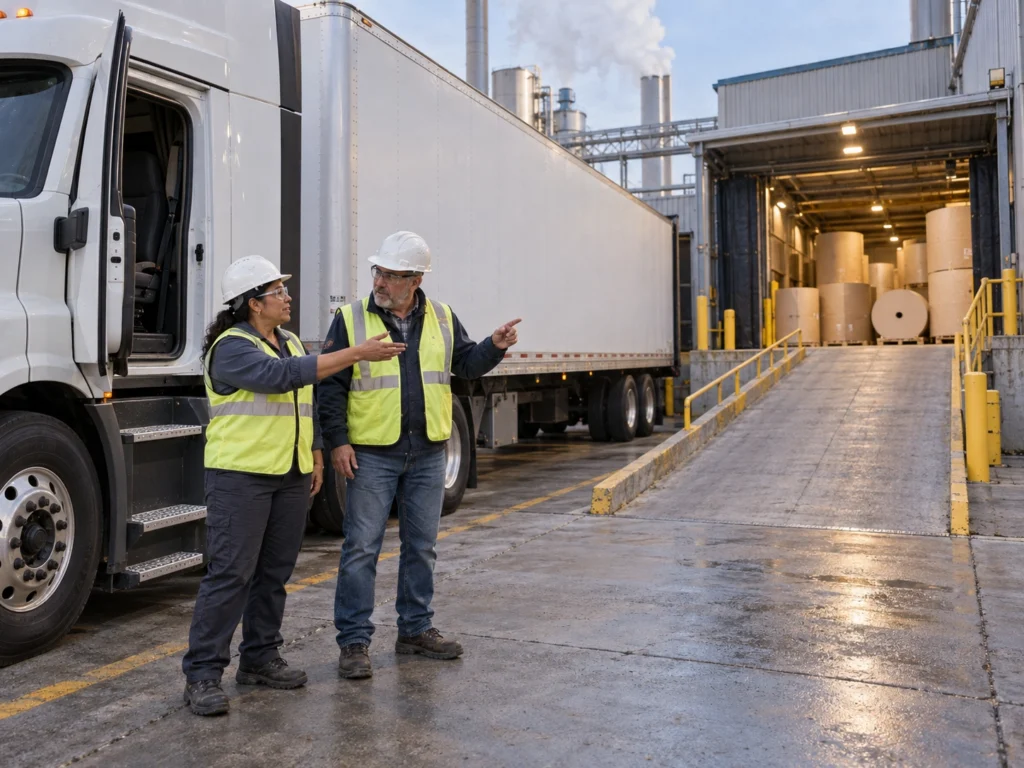
When a safety briefing lands the first time, safety and productivity follow.
Many mills run different languages across one crew, plus contractors and drivers at the gate. Pulling a bilingual worker off the line, or handing a driver a phone on the floor, costs time and creates its own problems.
- Translation is built into the conversation across 35 languages.
- A briefing or handoff reaches workers in their own language without stopping the job.
- A briefing understood the first time is a safety win, not just a convenience.
35
languages supported, hands-free. Nothing to stop and open on the floor, and no phone in a driver’s hand.
The numbers, from our customers
What changes when your lines run on Relay.
150%
6x
84%
Operational efficiency gains: fewer missed messages and repeated conversations.
Day one
Proof from the floor
The floor sells it better than we can.
“Our scale master can now give instructions to over-the-road drivers in their own language. Before, we had near-misses with drivers coming up the ramp unannounced. These devices eliminate that.”
Operations Manager, Global paper and packaging company
“One of the big things with Relay is emergency situations. With a cell phone you're just texting one person. With Relay, you're getting it out to the whole crew.”
Blaine Cash, Operations Manager, Recycle Management
"Everything's so simple and straightforward. There's not all this infrastructure to it, it's just right out of the box. Relay makes it very easy."
Operations Lead, Paper & Packaging Manufacturer
“When we deal with non-English speaking truck drivers, we used to find someone who spoke their language. Now the translator lets us avoid the delay.”
Christian Schultz, Site Manager, Superlite Block Lone Butte
The hardware behind the layer
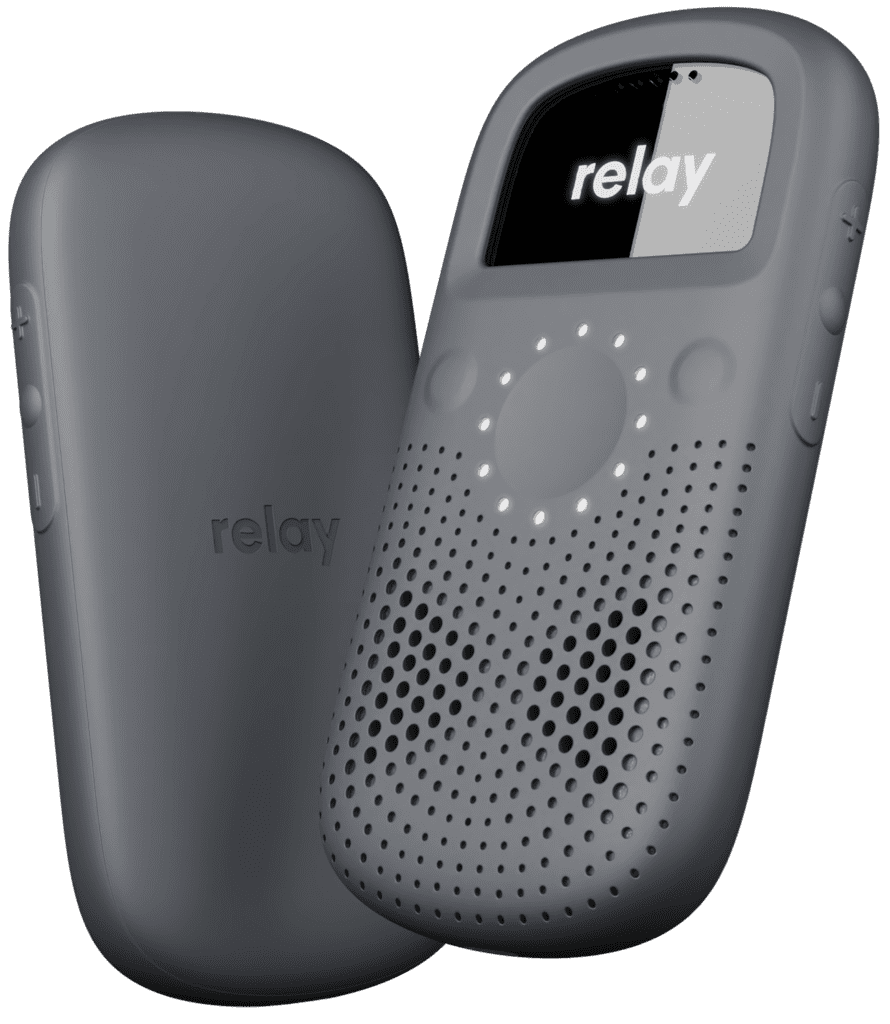
RelayX: built for the mill floor.
Two-way radios are tough but carry voice only, with no record and no translation. Reaching for a phone or tablet means a worker in gloves stops and looks away from moving machinery. Relay is voice-first and rugged, so both hands stay on the job and everything is one button away.
Audio
Dual 2W speakers and 3 noise-cancelling mics. Clear in a mill running near 100 dB.
Steady Link™
Wi-Fi and multi-carrier cellular at the same time, switching on its own. No repeaters, no FCC licenses, no dead zones.
Battery
Up to 24-hour battery. Covers back-to-back shifts without a swap.
IP68 + IP69K durability
MIL-STD 810H. Built for heavy wood dust, humidity, and hard drops.
Frequently Asked Questions
Relay is the system of action for physical operations: it captures what your frontline actually says and does, and turns it into action in the systems you already run. Mills run loud and never stop, and safety depends on whether the right message is heard, understood, and acted on in time. Relay gives frontline teams rugged communication built for loud, spread-out places: push-to-talk, real-time translation, broadcasts, panic and voice-code alerts, and message and location history.
Yes. Dual 2W speakers and three noise-cancelling mics give clear audio near 100 dB, and Steady Link™ runs over Wi-Fi and multi-carrier cellular at the same time. It keeps working under the paper machine, deep in the pulp mill, and on the converting line. For the loudest spots, Relay pairs with bone-conduction or in-ear accessories.
Translation is built into the conversation across 35 languages, so a safety briefing or shift handoff reaches workers in their own language. It works for contractors and drivers at the gate too, so nobody pulls a bilingual worker off the line.
One-button panic and voice incident codes send an alert with location on a map. Afterward, every conversation is captured, timestamped, and searchable, one clear source of truth for OSHA, insurance, and root-cause review.
Relay is a cloud-connected platform, not a local radio network. On top of push-to-talk it adds redundant connectivity, translation, location awareness, panic and incident workflows, and a searchable record. It replaces repeaters, FCC licensing, and radios that fail yearly. Fleet Shield® keeps the fleet current.
No. Relay connects over Wi-Fi and multi-carrier cellular instead of a local radio network, so there are no repeaters to install and no FCC licenses to hold or renew.
START Where it Matters Most
See what Relay can do in your mill.
Your throughput, your safety, and your language barrier are all communication problems. Tell us about your operation, and we’ll show you where Relay can have the biggest impact, from a run that stays right to a hazard call that reaches everyone.