
RELAY FOR HEALTHCARE
When help is one touch away, your team can stay present.
A panic button bolted under a desk you can’t reach. A code called over the loudspeaker that only makes an agitated patient worse. Help that arrives blind because no one could say what was happening. Relay lets your team call for help quietly, from anywhere, and get the right person to the right room in seconds.

THE THREE THINGS YOU'RE TRYING TO GET RIGHT
Staff safety, fast response, and keeping your people are all the same problem.
Most facilities still run on hardwired panic buttons, overhead paging, and radios that cut out in stairwells and courtyards. The seconds lost reaching for a button you can’t get to, or guessing where a code is happening, decide how an incident ends, and every incident that goes badly is a reason for a nurse to walk out.
73%
U.S. Bureau of Labor Statistics, 2020.
Staff safety
A panic button bolted under a desk the moment a nurse steps away from it, or a verbal call over a radio that adds tension to an already risky situation.
Fast response
An overhead page that says something is wrong, but not where.
Retention
Every incident that goes badly is a reason for good people to leave.
HOW IT WORKS
Three jobs, one radio your team already knows.
Stop reaching for a button you can't get to. Summon help from wherever you are.
Incidents happen in hallways, patient rooms, and courtyards, and a panic button fixed under a counter is useless the moment a nurse steps away from it.
- A discreet, one-touch alert on every staff member sends a call for help in seconds, wherever they are.
- The person who sent it gets a quiet confirmation that help is on the way, so they can stay present.
- Staff stop bracing for the moments they used to face alone.
30%

Know exactly where help is needed, and send the closest trained person.
An overhead page tells the whole building something is wrong, but not where, and it often makes an agitated patient more upset.
- Room-level location on every alert, so staff quietly pull the closest trained responder to the spot.
- Two-way audio means responders arrive knowing what they're walking into.
- A quiet, targeted response keeps the room calmer for patients.
6 → 1 min
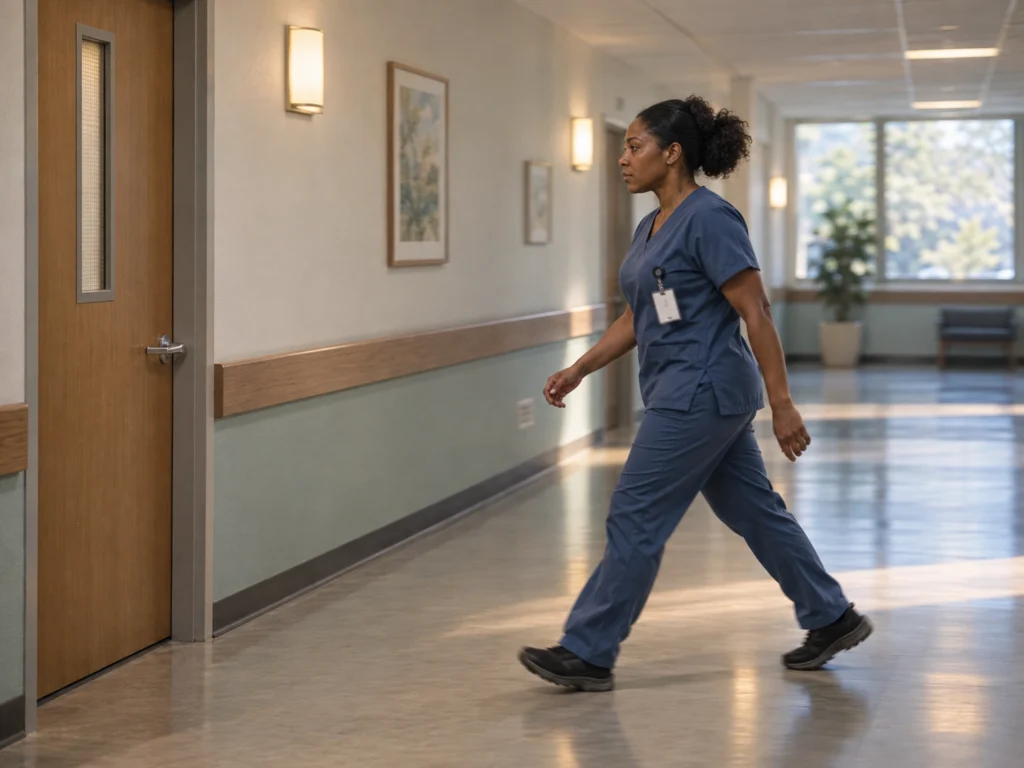
A safer shift is the reason your best staff stay.
Nurses who face high levels of workplace violence are far more likely to quit, and replacing a single bedside nurse costs an average of $61,110. Safety and retention are the same problem.
- When staff trust that help is one touch away, the daily fear that drives burnout starts to lift.
- Leaders get a clear, data-backed record of what happened after each event.
- Teams learn from incidents and prevent the next one instead of just reacting.
5.11x
more likely to leave, the flight risk for nurses facing high workplace violence, and what proactive safety helps prevent.

THE NUMBERS, FROM THE FLOOR
What changes when your team runs on Relay.
83% faster
30% fewer
Chemical restraints dropped at one behavioral health hospital, in weeks.
165% higher
Employee engagement increased that much with Relay.
Day one
Proof from the floor
The floor sells it better than we can.
“We can use them anywhere. Whether you're in the ambulance shed or the ER, you can still hear what's going on. The clarity is crystal clear. It works, every time.”
John Ayoub, CEO, Mobridge Regional Hospital and Clinics
“Integration with Relay has been amazing. If our paging system goes down or there's severe weather, we can turn to our Relays.”
Aaron Richardson, Diagnostic Imaging Director, Horizon Health
“The nurses love knowing it's available. To have peace of mind knowing if you needed it, it's there, has been well received.”
John Ayoub , CEO, Mobridge Regional Hospital and Clinics
“Relay makes them feel comfortable to reach out for help when needed, or reach their teammates to say I need help in a certain room.”
Jannice Lamm, Administrator, Oakview Medical Care Facility
The hardware behind the layer
RelayM: built for the way care actually happens.
Phones and pagers pull staff out of the moment, and a fixed alarm can’t follow a nurse down the hall. Relay is voice-first and worn on the body, so a staff member can call for backup without turning their back, breaking eye contact, or raising the tension in the room, from the ER to the courtyard.
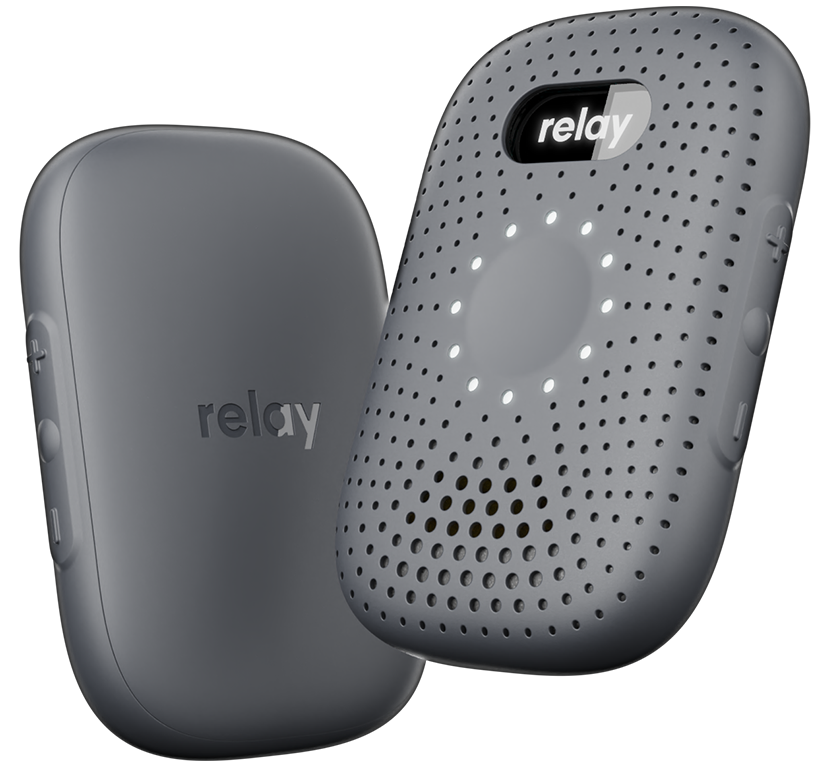
Discreet panic button
One touch summons help with room-level accuracy, quietly, without escalating a tense situation.
TeamTranslate™
Real-time translation across 35 languages, on the device, for clear and equitable care.
Room-level location
Alerts show exactly where help is needed, so the closest trained responder gets there first.
Steady Link™
Multiple cellular and Wi-Fi networks keep staff connected across the whole site, with far fewer dead zones.
Frequently Asked Questions
A wearable, voice-first device and cloud service that lets any staff member call for help with one touch, shows responders the exact room, and lets everyone talk back and forth in real time. Relay is the system of action for physical operations: it captures what your frontline actually says and does, and turns it into action in the systems you already run.
Because fear is one of the biggest reasons good people quit. Replacing one bedside nurse costs an average of $61,110, so even a small drop in turnover pays for itself. When staff trust that help is one touch away, the daily stress that drives burnout starts to ease.
Source: NSI Nursing Solutions, Inc., 2025
No. Relay sits on top of what you run now. Your nurse call and building systems keep doing their job, and Relay is the human layer that carries the call to the right person and keeps a record.
It’s built for the places a radio or phone gives up. It uses more than one cellular and Wi-Fi network at once and switches on its own.
That’s exactly what a discreet alert solves. Instead of a loud page and a rush of security, a quiet one-touch call pulls only the right people to the right room. Staff can ask for backup without turning their back or breaking eye contact.
Small. A team can be using it by the end of one shift, and there’s nothing new to learn since it works like the badge staff already carry. Most facilities start on one unit, see the results, and expand from there.
START ON ONE UNIT
See what Relay can do on your floor.
Staff safety, fast response, and keeping your people are all communication problems. Let us show you the seconds you can get back, and the peace of mind your team deserves.