Casinos have some of the most thoroughly documented operations anywhere, yet many of the most important moments on the gaming floor, like a delayed hand pay, a machine outage, or a guest dispute, are still hard to piece back together after the fact. A large share of what keeps a floor moving happens through voice, and the context inside those conversations often disappears once the moment passes.
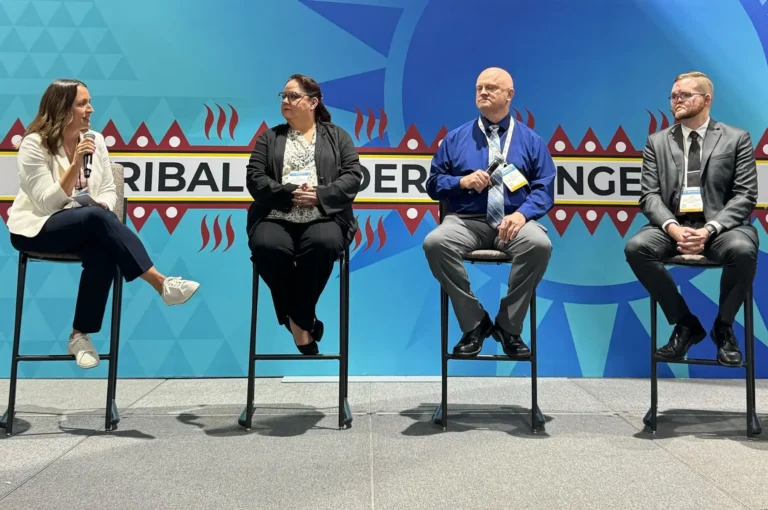
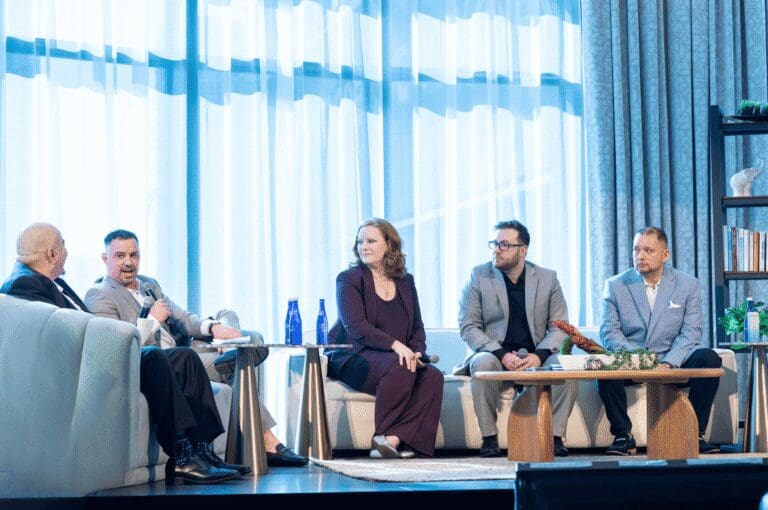
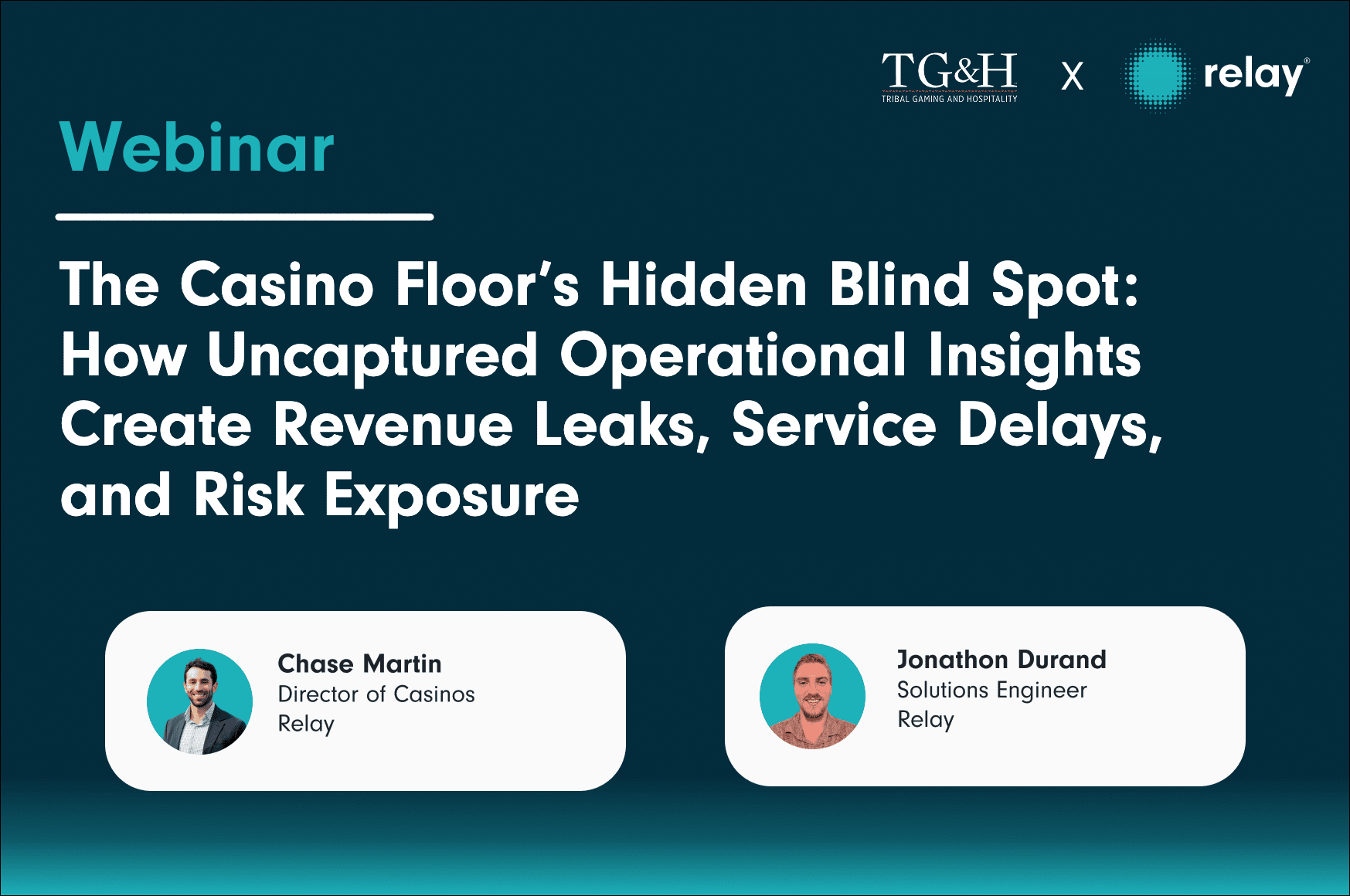
That gap was the focus of a recent webinar hosted by Tribal Gaming & Hospitality Magazine (TG&H), where Relay’s Chase Martin, Director of Casinos, and Jonathon Durand, Solutions Engineer, joined TG&H Executive Editor Chris Faria. They explored how everyday frontline conversations can improve service, incident review, and response, all without changing how your teams already work.
Detailed Records Don’t Tell the Whole Floor Story
Casinos already understand the value of a record. A $10 shortage is written down with the date, time, machine, amount, and a signature. But as Martin points out, not everything that keeps a floor moving follows the same paper trail. Guest requests, security calls, hand pays, and machine issues are coordinated over the radio, and those conversations help explain how the work actually unfolded.
A report shows what was documented, and surveillance video shows what was visible. Employees can fill in what they remember, but the communication connecting those pieces, including when a request began, who responded, and where the time passed, is the hardest part to reconstruct. As Martin explained, floor conversations can add the context that connects them.
A report shows what was documented, and surveillance video shows what was visible. Employees can fill in what they remember, but the communication connecting those pieces is the hardest to reconstruct. As Martin explained, reports and surveillance capture different parts of an event. Floor conversations can add the context that connects them: what was communicated, who responded, and how the response unfolded.
Where Missing Context Matters: Incidents and Service Delays
The same gap shows up in incident review and everyday service. When a guest waits too long for a hand pay or a machine sits idle, the operation can see the outcome, but not where the request stalled or where the response slowed.
“Knowing that a hand pay took too long tells you there was a problem; it doesn’t necessarily tell you what needs to change.” – Chase Martin, Director of Casinos at Relay
Once you can see where a response slowed, you can ask whether it was a one-off or a process issue creating the same delay again and again, which over time affects guest experience, machine uptime, and revenue. An attendee put this into real terms by asking about a hand pay that took around 45 minutes with no clear explanation. Durand explained that a transcript shows who made the initial request and every step that followed, so you can spot whether someone was never looped in, a step was missing, or the team took a less-than-optimal path to the right person.
How Can Everyday Conversations Become Operational Insight?
The idea is straightforward. Teams on Relay communicate as part of its normal work, and that communication is organized with the message, time, and channel together. Capturing this context does not add a separate reporting task for frontline employees, since the record is a byproduct of conversations already happening. The value goes to authorized leaders and teams, who can search by keyword, filter by speaker and channel, and verify the sequence against a timeline.
Many properties already log voice traffic, so the difference is how easy it is to go back and look through that information. Searching by keyword to pull up a transcript is far faster than scrubbing through audio by timestamp and wondering whether you are in the right spot. The same search can show how different shifts handled the same issue, so one shift’s faster resolution becomes a training opportunity.
What Can Better Context Mean for Guest Experience and Incident Review?
Reviewing what happened is only half of the value. Martin shared that one casino resort customer used live operational insights with its EVS team to identify guest needs as they were happening and respond before the moment passed, which helped drive a two-point increase in NPS. Guests feel whether someone responded and whether their issue was handled.
On the review side, a casino security leader shared that this context let them reconstruct a response and confirm when things happened. Pairing transcripts with room-level indoor location adds how quickly help reached the right spot, and the same location capability supports panic alerts so a team knows where someone in distress is.
What Is the Main Takeaway From the Webinar?
The information that explains how your floor actually responds is already being shared all day, and the opportunity is to make it easier to find and use. As Martin put it, the idea to take away is to “make floor conversations easier to find, understand, and use so your teams can respond, learn, and improve.”
Watch the full webinar above for the complete discussion and audience Q&A, or view it on TG&H.
Frequently Asked Questions
What is operational context on a casino floor, and why does it matter?
Operational context is the information around an event: when a request began, who responded, and where time passed. Reports and surveillance show what was documented and visible, but the conversation around the response explains the sequence, which helps you tell whether a delay is a one-off or a recurring process issue.
How can casinos improve the guest experience on the floor in real time?
Casinos can improve this by identifying guest needs while the guest is still there. Guests may not see the work behind the scenes, but they feel whether someone responded and whether their issue was handled.
How can casinos keep a record of recurring floor problems?
Authorized users can export conversations from the dashboard, so a pattern like the same issue across all three shifts over 30 days can be saved for your records. Incident history is also kept in the dashboard, giving leaders a documented trail for coaching and process conversations.
Who can access recorded floor conversations, and how should leaders use them?
Access is for authorized leaders and authorized teams, who use it to understand how a response unfolded and identify ways to improve the next one through coaching. Frontline employees keep communicating exactly as they do today.