The largest casino resort in Louisiana isn’t winning on size alone.
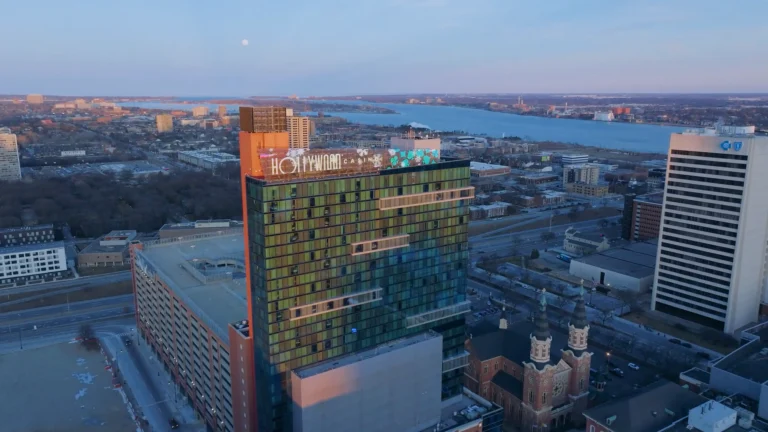
Coushatta Casino Resort, owned and operated by the Coushatta Tribe of Louisiana, has been building something since it opened in 1995 that most properties can’t manufacture: loyalty. Guests drive past three competing casinos to get there. They could be sitting at a slot machine thirty minutes earlier somewhere else. They choose not to.
The property itself is formidable. Nearly 2,000 slot machines, 70+ table games, over 800 hotel rooms, eight restaurants, a championship golf course, and more than 1,600 employees. A $150 million expansion is underway that will push the room count past 1,000 and create more than 150 jobs. As the second largest private employer in the state, Coushatta isn’t a regional casino. It’s a destination.
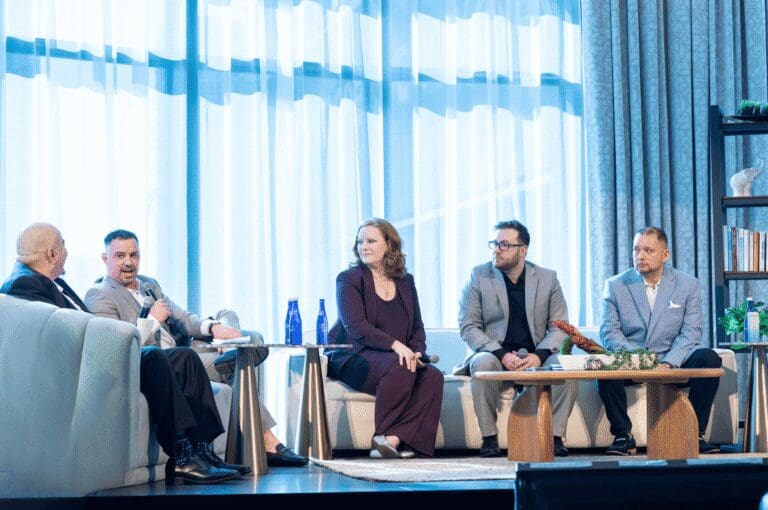
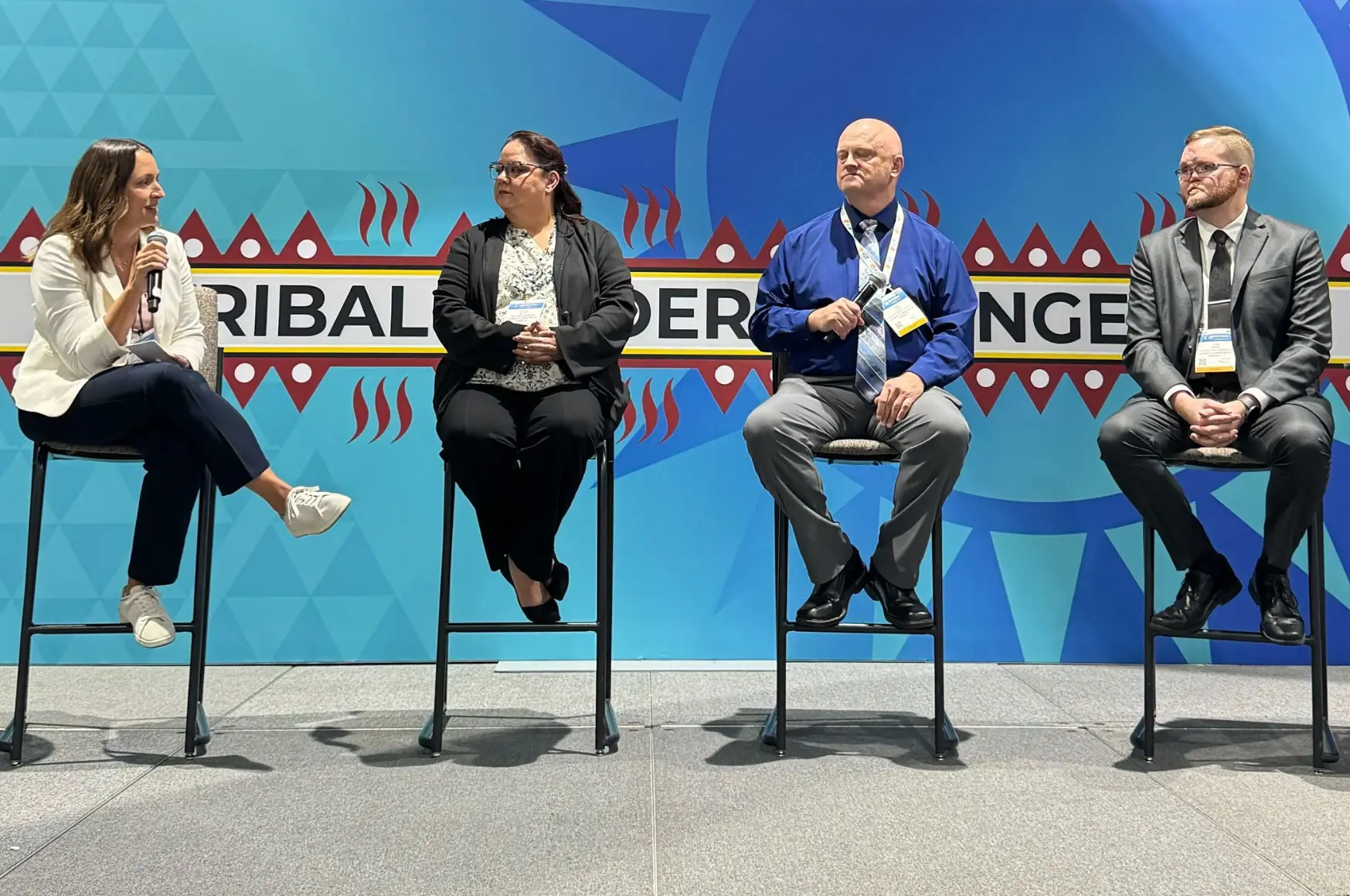
But the reason guests keep coming back has less to do with what they can see than what they can’t. At this year’s Indian Gaming Association (IGA) conference, three of Coushatta’s operations leaders sat down to talk about what actually drives guest experience at that scale. Brenda Monier (Slots), Ryan Rozas (EVS), and John Reeves (Security) each brought a different vantage point, but the same conviction: that world-class casino operations are built on communication most guests will never notice.
What emerged was one of the most candid conversations we’ve heard at a conference, told by three leaders whose philosophies are as distinct as the departments they run and as unified as the experience their guests feel.
Why Brenda Monier Fights to Protect the Best Moment of Every Guest’s Visit
Brenda has a simple conviction that guides how she runs the slots operation: the moments guests remember most are the ones operators are most likely to accidentally ruin.
A jackpot winner doesn’t just want their money. They want to feel the win. “There’s a feeling of elation, a lot of dopamine,” Brenda said. Then come the questions about taxes and checks and photos and marketing consent. Under the best circumstances, that’s a lot to navigate. Add a language barrier and the clock starts moving against you.
Coushatta serves guests from a wide range of backgrounds and languages. When a guest who speaks Vietnamese or Spanish hits a jackpot and needs to have a real conversation about taxes and consent forms, the slots team has to be ready. Previously, they weren’t.
“We would have to call around other departments, find someone who would speak the language that we needed, wait for those people to come along,” Brenda explained. “That’s causing the excitement to fade and the frustration to mount.”
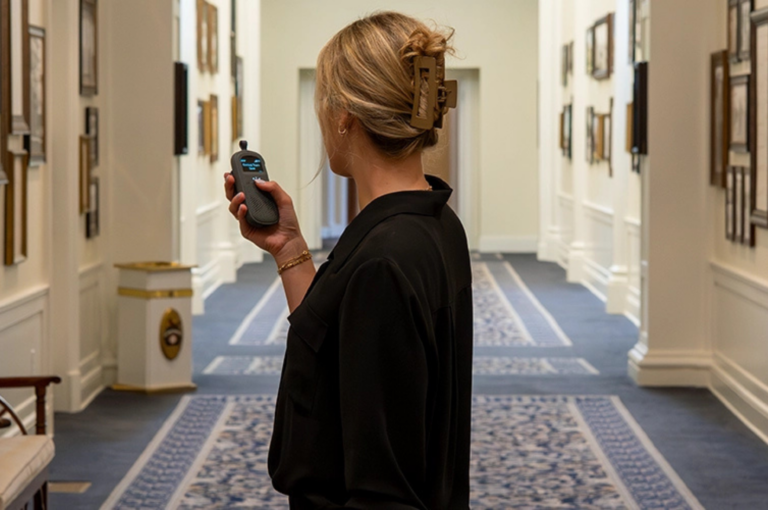
After Coushatta adopted a new communication platform with built-in translation, that dynamic changed completely. Being able to handle conversations in real time, accurately, directly, and without delay changed what a jackpot moment feels like for guests who might otherwise have felt like an afterthought. “We can just click a button, say translate Spanish or translate Vietnamese, and then directly communicate,” Brenda said. “We don’t have to delay the payout. We get that information, we get it correct.”
Her advice to other operators was pointed: “Don’t underestimate the power of communication with your players. We want to preserve that feeling of elation and excitement. We want them to leave from us saying that it was a wonderful experience.”
The translation capability is one example of a much broader philosophy. For Brenda, every friction point on the slots floor, whether it’s a language barrier, a delayed payout, or a question that goes unanswered too long, is a threat to something fragile and valuable. Guests don’t remember the machine they played or the amount they won as much as they remember how the experience made them feel. Brenda’s job, as she sees it, is to protect that feeling at every step. When communication between her team and her guests is fast, accurate, and human, the guest leaves with something worth coming back for.
Why Ryan Rozas Believes Every Person on Your Team Deserves to Be Set Up for Success
Ryan’s philosophy about EVS starts with a simple premise: your team can only perform as well as the foundation underneath them. And for years, that foundation had a significant gap.
Legacy radios cost roughly $1,500 to $1,600 per unit. At that price, equipping an entire hourly EVS workforce wasn’t feasible, leaving only 35 to 40 percent of Ryan’s team with any way to communicate on the floor. The workarounds were awkward. If Ryan needed to reach someone, he’d call a third person and ask them to pass the message along. If something went out over a shared radio channel, the whole team heard it. “Whenever you call on a traditional radio everybody can hear hey, John’s coming to the office. Well then you got the gossip mill starting.” Running a department that way creates friction at every level: slower response times, less accountability, and a team that’s always operating with incomplete information. And when a team is operating with incomplete information, the guest eventually feels the gap, even if they can’t name it.
When Coushatta decided to equip every EVS associate with a new communication device, the shift was structural. “We went from probably about 35 to 40% of the people having access to communication to 100% of people having access,” Ryan said. That’s not a marginal improvement. It’s a fundamentally different operation. Supervisors weren’t relaying messages anymore. People weren’t working in the dark. Every associate on the floor could flag an issue, call for help, or receive direction in real time. For the first time, the department was actually working as a unit.
But what that shift meant at a human level became clear when Ryan shared something personal. Ryan is legally blind and has limited hand dexterity. With a traditional radio, changing channels meant memorizing how many physical clicks of a knob it took to reach the right department, all without being able to see the screen. It was a daily obstacle built into the tools he relied on. His EVS team includes elderly workers navigating the same challenges on every shift.
“To be able to go to the radio and just click it and say ‘go to maintenance’ and it switches to maintenance, that was a godsend for me,” Ryan said.
That moment is worth sitting with. Ryan isn’t describing a convenience. He’s describing what it feels like to finally have a tool that was built with him in mind. And at Coushatta, that’s not an accident. Ryan closed his remarks by thanking the Tribe directly. “They’re so open to innovation and this is just one example of how we’ve done it to really affect our guest service.” That openness, the willingness to ask whether the tools they were giving their people were actually working for their people, is what separates Coushatta’s approach from a standard technology upgrade. When you build for your whole team, the whole team gets stronger. And when your team is stronger, your guests feel it, even when they don’t know why.
Why John Reeves Measures a Good Day in Security by What Guests Never Notice
John has a particular way of describing what a good day in security looks like. It’s the day when thousands of guests move through a 100,000-square-foot casino, enjoy themselves, and go home without ever thinking once about the team that was quietly making sure nothing went wrong. That invisibility isn’t a failure of recognition. It’s the whole point.
Getting there requires preparation that most operators don’t see until something tests it. Louisiana’s tribal gaming compact requires security officers at every casino entrance. Officers walk the floor continuously to reduce risk. At Coushatta’s scale, that’s an enormous amount of ground to cover, and knowing where your people are at any given moment, especially when a situation is developing, is the difference between a coordinated response and controlled chaos. Automatic location data and transcribed communication logs changed how John’s team operates. He can confirm officer positioning in real time, reach the right person directly without broadcasting to the whole channel, and reconstruct precise timelines after the fact without relying on anyone’s memory.
That last piece matters more than it might seem. When incidents lead to reporting, and reporting leads to legal proceedings, having a verbatim, time-stamped record of what happened and when isn’t just useful. It’s protection for the people who did their jobs right.
John’s philosophy was put to its most dramatic test several months ago, in what the team now calls “the smoke event.” A mechanical issue in an HVAC system caused particulate matter to smolder, and what poured out of the ductwork looked, in John’s words, “like theater smoke effects.” The haze spread across the casino floor. The root cause was unknown. A full evacuation of an active 100,000-square-foot casino was on the table.
Security, EVS, slots, maintenance, surveillance, tribal police, and tribal fire all had to work as one unit. Men were on the roof, in ceilings, in ductwork. Brenda’s slots team stepped in to cover casino entrances so John’s officers could focus entirely on the response. Guests were monitored, offered masks, and moved away from affected areas as the team closed in on the source.
The crisis was resolved before evacuation became necessary. Complaints were minimal. “It has to be dramatic for people to want to leave the building,” John noted. The guests who stayed on the floor that day had no idea how close it had come to something much more disruptive. That’s not luck. That’s what it looks like when every department on a casino floor is already operating as one before the emergency ever arrives.
“That was a very good situation where all the departments in the casino became one cohesive unit to be able to solve this grand problem,” John reflected.
For any operator who has run a tabletop exercise and wondered whether the real thing would hold together, Coushatta’s smoke event is the answer. That kind of response doesn’t happen by accident. It happens because Coushatta made a deliberate choice, long before any emergency arrived, to build the kind of foundation that holds when everything is on the line.
When Every Department Becomes One Team, the Guest Feels It
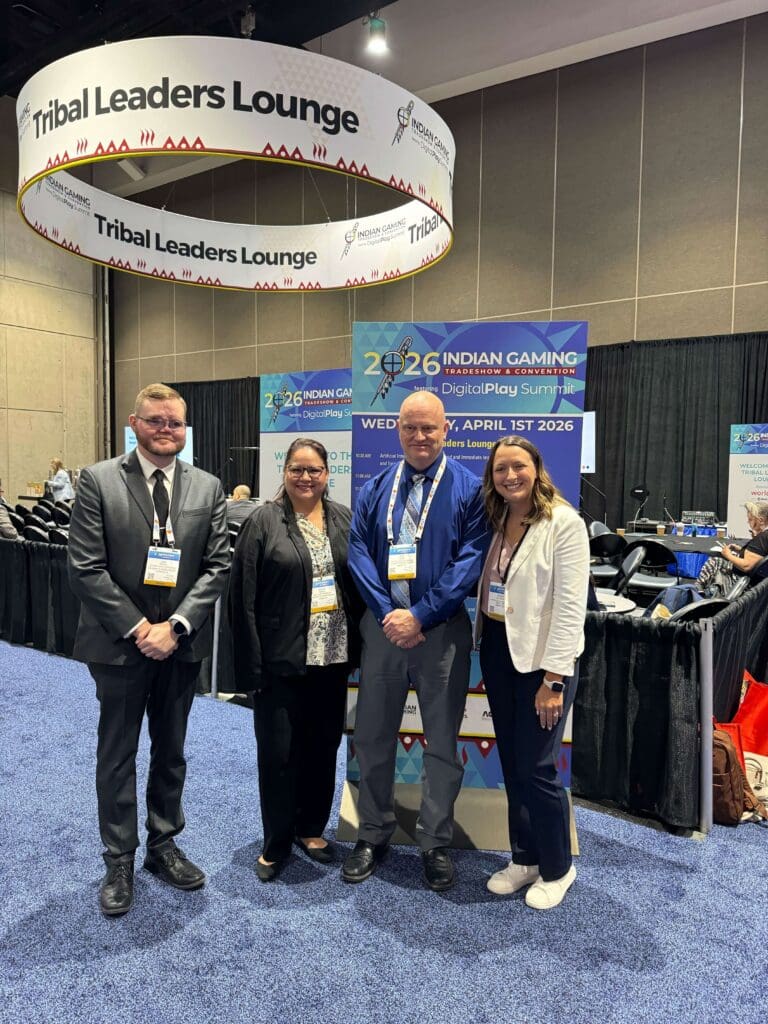
Three departments, three philosophies, one shared conviction: that the guest experience isn’t owned by any single team. It’s built in the space between them, in the moments of coordination, communication, and trust that guests never see. That’s what Coushatta has built. And it shows up the same way across every department.
The same way Brenda turns a jackpot into a memory worth coming back for. The same way Ryan ensures the work that keeps a 100,000-square-foot property running never shows up in a guest’s experience. The same way John turns a potential crisis into something no one ever knows happened.
John closed the panel with a challenge that landed differently coming from someone who has lived all of this firsthand. “Take that leap, take that jump, embrace newer technology. As a society and generationally, there’s a lot of instant gratification. The technology with these devices helps provide that instant gratification to guests to enhance that guest service.”
That is the Coushatta way. A Tribe that has spent thirty years building something guests can feel but never quite put their finger on. Brenda protecting the moments they’ll remember. Ryan building the foundation they’ll never see. John making sure the things that could go wrong never reach them at all. When those three forces work together, the guest doesn’t think about departments, technology, or coordination. They just know that Coushatta is the place they want to be. And they’ll drive past other casinos to prove it.
For casino operators looking to go deeper on cross-department communication strategy, we put together A Guide to Effective Team Communication for Casino Leaders— a practical resource built around the same operational challenges Brenda, Ryan, and John discussed at IGA.