Last Updated on July 24, 2026
Walkie-talkies took the world by storm back in the 1930s when they were first invented – revolutionizing business communication and forging connections across distances. But, as the landscape (both literally and figuratively) has changed, so has standard walkie-talkie range.
While effective with a clear line of sight, the distances you can communicate with a walkie-talkie vary when obstacles occur – from the terrain and the use of nearby electronics, to wall thicknesses and even the weather.
In business, walkie-talkie range is one of the biggest talking points. Today, companies need fast, clear communications to ensure safety and productivity on their premises. So, how do you achieve good signal, and which two-way radio do you choose?
In this article, we’ll explain walkie-talkie ranges, how two-way radio coverage works, obstacles that can reduce signal, and how to increase the effectiveness of your walkie-talkie and find the best two-way radio for you.
At a Glance
- Walkie-talkie range obstacles fall into three main categories: physical structures, natural terrain, and environmental interference. Most range problems businesses experience trace back to building materials, not device limitations.
- Concrete, steel, and brick can cut walkie-talkie range by 50-75% compared to open-air performance. A device rated for several miles outdoors may only cover a single floor inside a dense warehouse.
- UHF frequencies penetrate walls and obstacles better than VHF, making UHF the practical choice for indoor business environments. VHF performs better in open outdoor terrain where clear line-of-sight is available.
- Repositioning, antenna adjustments, and adding a repeater can extend walkie-talkie range without purchasing new devices. When obstacles are structural, a repeater is typically the most cost-effective fix.
- Push-to-talk devices that operate on cellular or Wi-Fi networks bypass frequency range obstacles entirely. Teams working across large facilities or multiple buildings often see the biggest gains from switching to a connected device.

What is the Typical Range of a Walkie-Talkie?
The typical range of a walkie-talkie is between 2-5 kilometers (1-3 miles). Long-range walkie-talkies operate across distances up to 15 kilometers (around 9 miles). Radios that operate on cellular or Wi-Fi have a nationwide range (meaning they provide national coverage).
What is the Maximum Range a Walkie-Talkie Can Achieve?
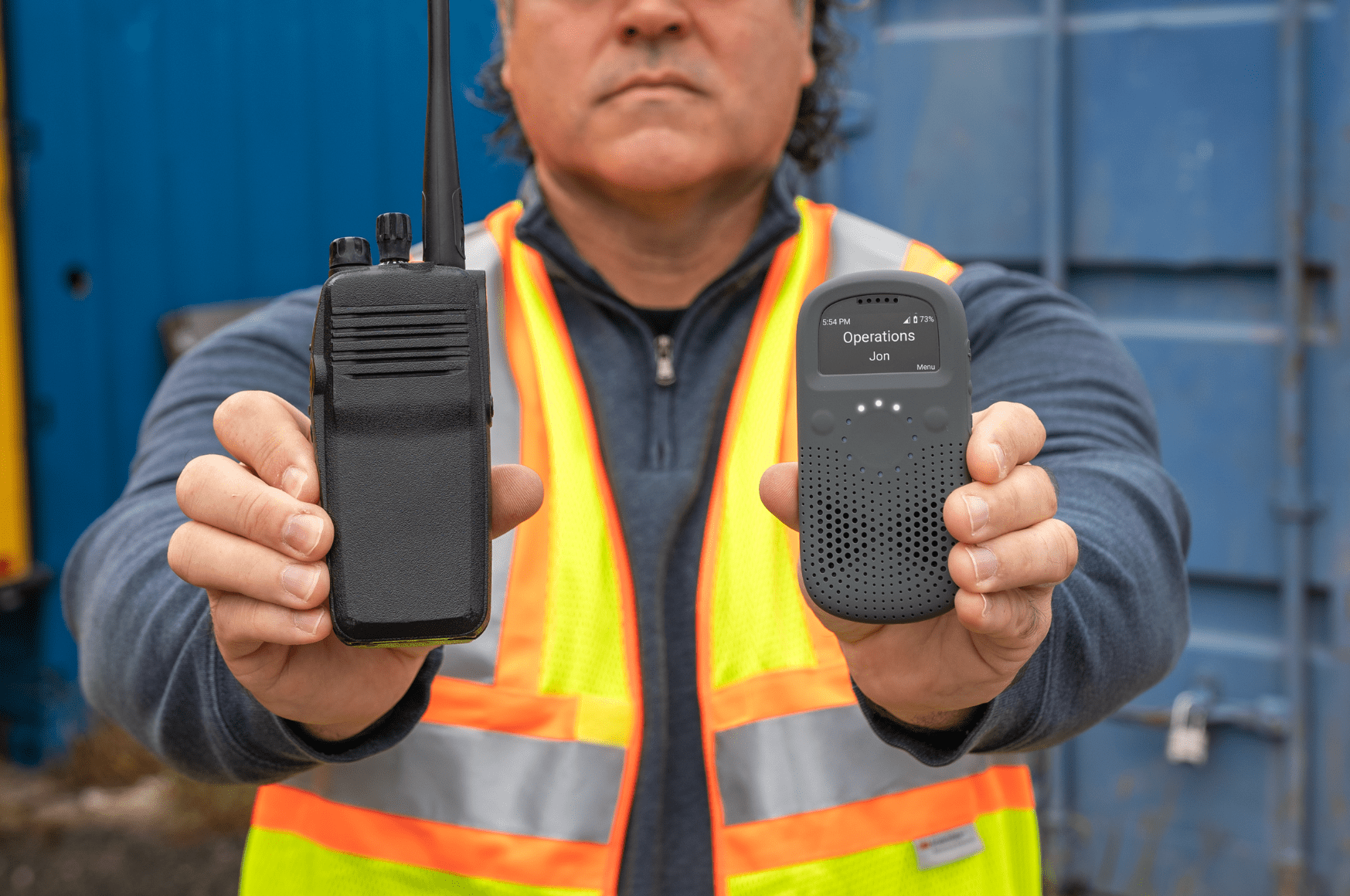
Technically, a walkie-talkie can reach a nationwide range at a maximum (distances of 1000+ miles/kilometers). Yet this is only possible with a walkie-talkie that operates on Wi-Fi or cellular networks. These are often referred to as two-way radios or smart radios, rather than walkie-talkies.
Traditional walkie-talkie ranges (that operate via antenna and radio frequencies) vary. A vehicle walkie-talkie claims to have the longest range, up to 48 kilometers (or 30 miles). GMRS and Ham radios also claim to have longer ranges, yet these require a license to operate.
However, it’s important to remember that frequency radios can experience interference which can reduce distances – potentially quite significantly.
What Obstacles Reduce Walkie-Talkie Range the Most?
The best environment is a flat, open area, like a desert or a field, as this allows the radio to communicate further. Areas with obstructions, like mountains, buildings, or people, can experience poorer signals.
The natural environments that can reduce walkie-talkie range include:
- Hilly or mountainous areas: Hills can block signal and reduce range
- Forests or jungles: Trees and dense shrubbery can absorb and scatter radio waves, thus reducing range
- Rainy, snowy, or foggy weather: Can interfere with signal strength, reduce range, and cause static
- Extremely humid conditions: High humidity can absorb and scatter radio waves, similar to the effects of rainy weather
- Inside buildings with many internal walls: Concrete and steel inside buildings can block and reflect waves, reducing range
- Areas surrounded by obstruction: Any large objects, like shelving units in a warehouse or vehicles in a parking lot, can reduce range
Business environments that can struggle with walkie-talkie signal and experience poor range include:
- Airports: Operating walkie-talkies across buildings or in an area surrounded by planes or vehicles can obstruct signal strength
- Warehouses: Boxes and shelving units can interfere with range
- Manufacturing buildings/factories: Machinery, steel, and concrete walls can affect signal and decrease range
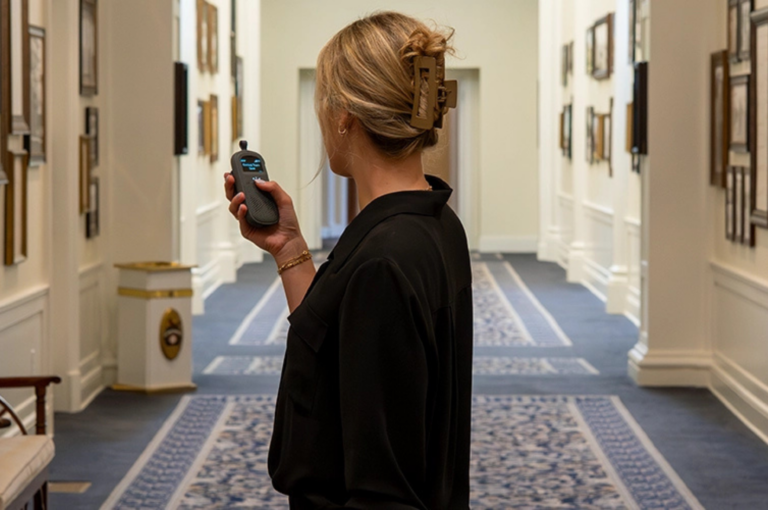
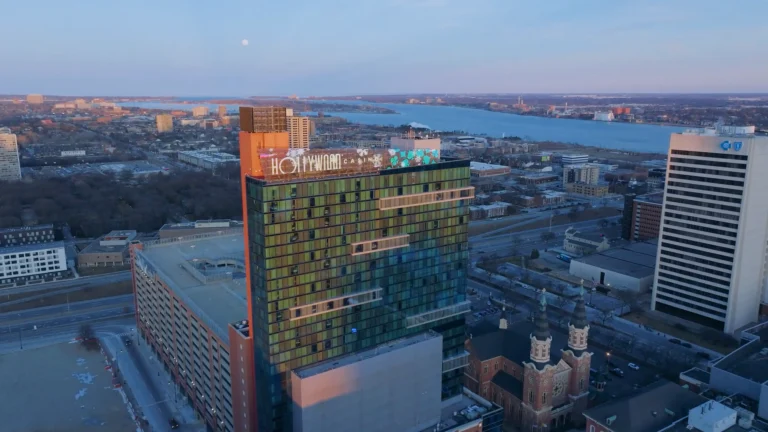
- Hotels: Large premises and heavily partitioned buildings can struggle with signal strength and range
- Construction sites: Sites with obstructions and frequently used electronics can cause line of sight or electromagnetic interference
- Large venues at full capacity: Signal strength can be weakened when large groups of people are gathered close to walkie-talkies
How Can You Extend Walkie-Talkie Range Without Replacing Your Equipment?
Try the below to increase the range of a walkie-talkie:
- Change channels/frequency: Switch the channels or frequency of the radio to see if any provide a clearer or longer range in your area
- Obtain a clearer line of sight: Operate the walkie-talkie in an open area without any obstructions, or obtain higher ground in a populated area (like at the top of a hill or building)
- Fully charge the battery: Low walkie-talkie battery life can disrupt the range and signal, so make sure the device is fully charged
- Create distance between power lines or electronics: Use a walkie-talkie away from any potential electromagnetic interference
- Obtain a repeater: Install a walkie-talkie repeater with an antenna in the location, ensuring the repeater is compatible with your walkie-talkie and you have the right licenses to operate it
- Wait for better weather: Trying to operate a walkie-talkie when is raining, snowing, foggy, or during a storm may cause static
- Switch to cellular: Use a two-way radio that operates on 3G/4G/5G or Wi-Fi to increase radio communication range and remove all interference (learn more about Relay radios with nationwide range)
How do UHF and VHF Frequencies Affect Walkie-Talkie Range?
When purchasing a walkie-talkie, you’ll usually find the following in their specification: the frequency they operate on (UHF or VHF) and the radio service they use (typically FRS, MURS, GMRS, or Wi-Fi/Cellular).
The frequency and radio service impact walkie-talkie range, and which environment it performs best. This only applies to walkie-talkies that operate only on frequencies, not radios that work on LTE, 3G/4G/5G, or Wi-Fi (like Relay).
Types of frequencies:
The most common frequencies found in walkie-talkies are VHF (Very High Frequency) and UHF (Ultra-High Frequency):
- VHF: Has a frequency range between 30-300 MHz and operates on a longer range compared to UHF. However, it struggles to penetrate through buildings and works better in open areas.
- UHF: Has a frequency range between 300 MHz to 3GHz, but has a shorter range compared to VHF. It works well in urban areas and can penetrate through walls, buildings, and other obstacles.
Types of radio services:
The main types of radio services you can access with a portable radio are FRS, MURS, GMRS, and LTE/Wi-Fi:
- FRS (Family Radio Service): Is a publicly available frequency, accessible without a license. These types of walkie-talkies come in short and long ranges. FRS is authorized for 22 channels in the 462-467 MHz range and operates best in urban areas.
- MURS (Multi-Use Radio Service): Doesn’t require a license and uses 5 channels within the frequency range of 151-154 MHz. It operates across short and long distances, but generally performs better in rural areas rather than in urban areas.
- GMRS (General Mobile Radio Service): Is available via a license and can cater to short and long distances. It utilizes channels around 462-467 MHz, but has additional channels compared to FRS, plus repeater channels, which enable extended ranges.
- LTE/Wi-Fi: Typically requires a subscription (see Relay pricing) and offers nationwide range. It combines Wi-Fi with all major U.S. cellular networks (switching automatically to find the best coverage) and offers superior audio quality and reliable communication.
How Does Line-of-Sight Affect Walkie-Talkie Range?
Walkie-talkies are designed to perform best when there is a clear line of sight. This means if two people are holding a walkie-talkie, they should be able to see each other to gain clear, strong, and long-range communication.
Anything that interferes with the line of sight reduces how far you can communicate with a walkie-talkie. For example, if there is a person, building, hill, or even fog in between you, it can decrease range.
What Should Businesses Look for When Choosing Walkie-Talkies for Obstacle-Heavy Environments?
The best walkie-talkie for you depends on your location and your primary use of the device. Read our guide on how to choose the best walkie talkie for your business.
When choosing a two-way radio for business use, it’s important to consider:
- Whether you need long or short-range communication
- The obstructions on the business premises
- How critical indoor and outdoor communications are (including emergency communication)
- FCC regulations and licenses required
- Any additional features you need in a communications device (e.g., man-down alarms, location tracking, and live language translation)
Using Relay for business
Alongside enabling fast, clear communication between employees – even those in different buildings nationwide – Relay radios are designed to improve productivity in the workplace, with features including:
- Group communication and push-to-talk
- Reliable, nationwide range
- Live translation of 35+ languages (to remove language barriers and improve communication between employees)
- Make phone calls between devices
- GPS and Bluetooth to locate people and things
- A built-in panic button, enabling employees to discreetly call for help in an emergency or dangerous situation
- A Relay App, enabling management to use Relay features and communicate with employees, without having a device themselves
Learn more about Relay at your own pace in our on-demand video demo center.

Frequently Asked Questions
What obstacles reduce walkie talkie range the most?
Building materials are the biggest range killers. Concrete walls, steel frames, metal roofing, and brick significantly absorb or block radio signals. Elevation changes (hills, multi-story buildings) also reduce effective range by interrupting line-of-sight. Dense foliage, severe weather, and large metal equipment create additional signal loss. The advertised range of a walkie talkie assumes ideal open-air conditions that almost never exist in real workplaces.
How much does building material affect walkie talkie range?
Effects vary by material, but the drop can be dramatic. Wood framing reduces range minimally, drywall and glass have moderate impact, concrete and brick can cut range by 50-75%, and metal structures or reinforced concrete can block signals almost entirely. A walkie talkie rated for 2 miles outdoors might only cover a single floor in a steel warehouse.
Can you increase walkie talkie range without buying new equipment?
Yes, several techniques help. Move to higher ground or near windows when transmitting, avoid placing the radio against your body which absorbs signal, use a longer or external antenna if supported, and adjust your frequency if interference is the issue. For persistent range problems, adding a repeater extends coverage — see our deep dive on long range walkie talkies for business-specific options. But if range is a structural problem with your facility, equipment changes have limits.
What’s the difference between UHF and VHF for range in buildings?
UHF (Ultra High Frequency) penetrates buildings and handles obstacles better, making it the typical choice for indoor business use. VHF (Very High Frequency) travels farther over open terrain and around natural obstacles like hills, making it better for outdoor or rural use. Most business walkie talkies are UHF because most business environments are buildings with walls and equipment. Teams comparing device types for indoor coverage should also review how digital vs analog radios handle obstacle-heavy environments.
How do you troubleshoot poor walkie talkie range in your facility?
Start by mapping dead zones in your workplace: where does communication fail consistently? Check whether you’re dealing with range limitations, interference, or equipment issues. Test with fresh batteries and external antennas to rule out equipment. If the problem is structural (thick walls, large facility, multiple floors), the fix usually requires a repeater, a different frequency band, or moving to a connected device that uses cellular or Wi-Fi instead of radio waves.
Upgrade to Relay Radios For Reliable, Extended Range
Designed for businesses big and small, Relay radios operate with nationwide signals to deliver superior audio quality for your employees – no matter where they are.
With an all-in-one communications solution that combines the most essential features for frontline teams, Relay can unlock your productivity and streamline business communication. Ready to upgrade your business radios? Book a demo or see our pricing plans today!